Book Appointment Now

Best Psychiatrist in Mumbai for Bipolar Disorder
A compassionate, evidence-based guide from Dr. Pavan Sonar — helping you understand, recognise, and treat bipolar disorder with confidence.
“Bipolar Disorder is one of the most misunderstood conditions in psychiatry. It is a treatable medical condition, and with the right care from the best psychiatrist in Mumbai for Bipolar Disorder, patients can live full, stable lives.”
— Dr. Pavan Sonar, Senior Consultant Psychiatrist
What Is Bipolar Disorder?
Bipolar Disorder — formerly called manic-depressive illness — is a chronic mental health condition characterised by extreme shifts in mood, energy, activity levels, and the ability to carry out day-to-day tasks. These mood episodes range from periods of elated, irritable, or energised behaviour (known as manic or hypomanic episodes) to periods of deep sadness or hopelessness (depressive episodes). Unlike ordinary mood fluctuations, bipolar episodes are intense, persistent, and can significantly disrupt a person’s relationships, work, and overall quality of life.
Bipolar disorder affects approximately 2-3% of the global population and is one of the leading causes of disability worldwide. In India, the prevalence is estimated at around 1-2%, yet the condition remains vastly underdiagnosed and undertreated, particularly in urban centres like Mumbai where the pressure of daily life can mask or exacerbate symptoms. Seeking help from the best psychiatrist in Mumbai for Bipolar Disorder is one of the most courageous and intelligent decisions a person — or their family — can make.
Types of Bipolar Disorder
Bipolar disorder is not a single condition — it is a spectrum. Understanding which type a person has is essential for selecting the most effective treatment approach. Dr. Pavan Sonar carefully evaluates each patient’s mood history to determine the precise subtype and tailor therapy accordingly.
Bipolar I Disorder
Bipolar I is defined by the presence of at least one full manic episode lasting seven days or more, or shorter if hospitalisation is required. Depressive episodes of at least two weeks commonly accompany mania, though their presence is not required for diagnosis. This is the most severe form and often requires immediate psychiatric intervention to ensure the patient’s safety and stability.
Bipolar II Disorder
Bipolar II is characterised by a pattern of depressive episodes and hypomanic episodes — less severe than full mania, without psychosis or hospitalisation. Patients with Bipolar II often suffer for years without a correct diagnosis because the hypomanic phases can feel productive or enjoyable, while the depressive phases attract the most clinical attention. Many individuals are mistakenly treated for unipolar depression, which can worsen the course of illness if mood stabilisers are not included in the treatment plan.
Cyclothymic Disorder
Cyclothymia involves numerous periods of hypomanic symptoms and depressive symptoms over at least two years (one year in adolescents), but the symptoms do not meet the full diagnostic criteria for a hypomanic or depressive episode. Though considered a milder form, cyclothymia can cause significant functional impairment and carries a risk of progressing to Bipolar I or II if left untreated.
Other Specified and Unspecified Bipolar Disorders
This category covers bipolar spectrum presentations that cause significant distress but do not fit neatly into the three categories above. Rapid cycling (four or more mood episodes per year), mixed features (simultaneous manic and depressive symptoms), and substance-induced mood disturbances may all fall here. A detailed psychiatric assessment is essential to classify these conditions accurately and design the right treatment plan.
Recognising the Symptoms of Bipolar Disorder
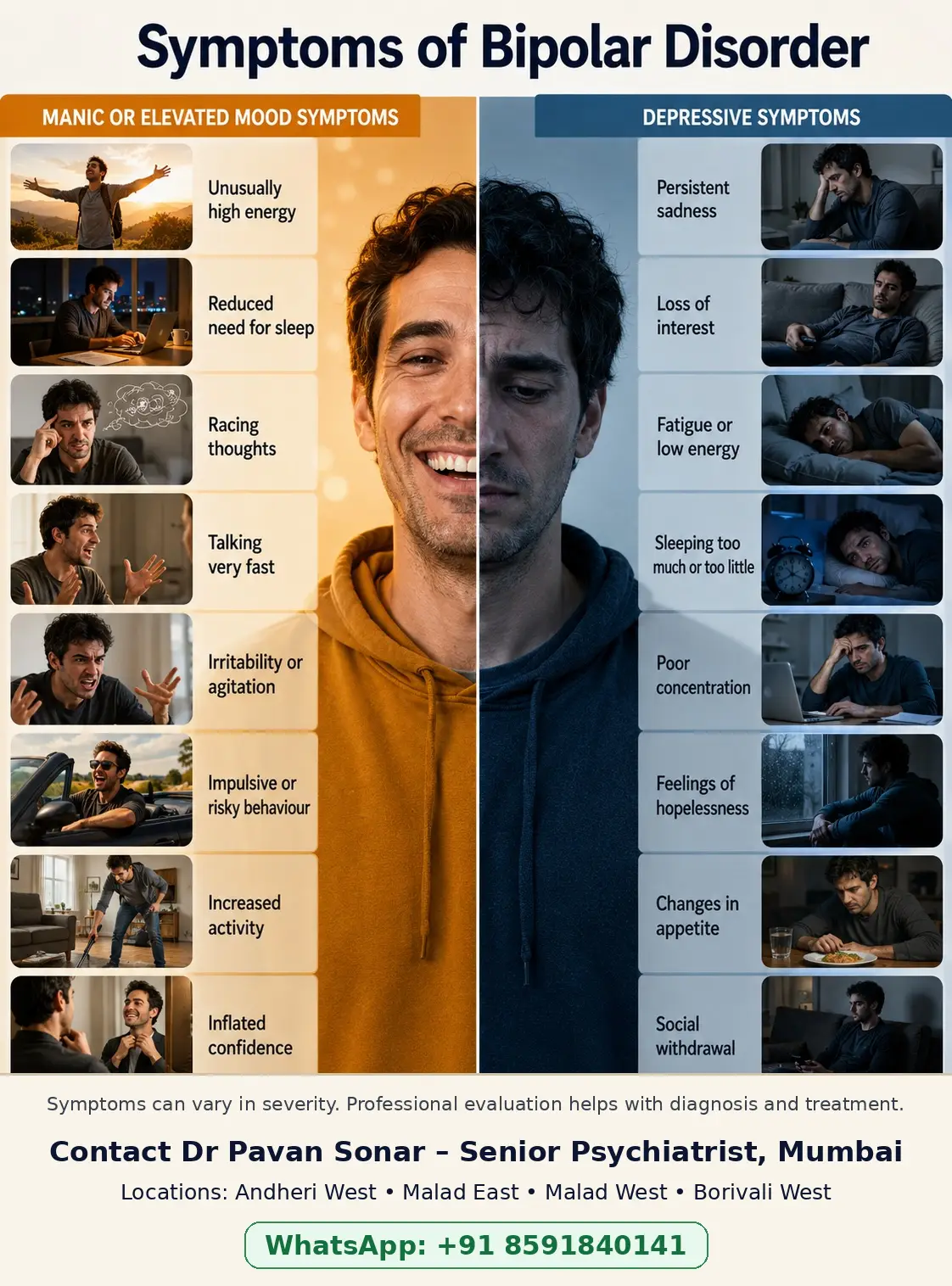
The symptoms of bipolar disorder span two poles — mania and depression — and can vary widely in intensity and duration. Recognising them early is critical for timely intervention. If you or a loved one are experiencing the following symptoms, please reach out to the best psychiatrist in Mumbai for Bipolar Disorder without delay.
Symptoms of a Manic Episode
- Inflated self-esteem or grandiosity — an exaggerated sense of one’s own abilities, importance, or power that is clearly out of proportion to reality
- Decreased need for sleep — feeling fully rested after only 2-3 hours of sleep, without experiencing fatigue the following day
- Pressured, rapid speech — talking incessantly and quickly in a way that others find difficult to interrupt or follow
- Racing thoughts and flight of ideas — the mind jumping rapidly from one thought or topic to another with little logical connection
- Distractibility — attention easily pulled to irrelevant external stimuli, making it difficult to focus on any single task
- Increased goal-directed activity or psychomotor agitation — excessive planning, starting multiple projects, restlessness, and inability to sit still
- Reckless behaviour — impulsive financial decisions, risky sexual behaviour, substance misuse, or other high-stakes actions with potentially serious and irreversible consequences
- Psychosis in severe mania — hallucinations (hearing or seeing things that are not there) or delusions (fixed false beliefs) that represent a complete break from reality
Symptoms of a Depressive Episode
- Persistent sadness or emptiness — a low, hopeless, or hollow mood that lasts most of the day, nearly every day
- Loss of interest or pleasure (anhedonia) — inability to enjoy activities that were once found pleasurable, including hobbies, social interaction, food, or intimacy
- Fatigue and loss of energy — feeling physically and mentally exhausted even after minimal exertion
- Cognitive difficulties — significant trouble concentrating, remembering details, or making even simple decisions
- Changes in sleep patterns — either profound insomnia (inability to sleep) or hypersomnia (sleeping excessively, yet never feeling rested)
- Changes in appetite or weight — significant unintentional gain or loss without any deliberate dietary changes
- Feelings of worthlessness or excessive guilt — harsh, distorted self-criticism that is disproportionate to any real shortcoming or fault
- Suicidal ideation or attempts — persistent thoughts of death, self-harm, or active plans to end one’s life, which requires immediate psychiatric emergency support
Symptoms of a Hypomanic Episode
Hypomania mirrors mania but is less severe and does not cause marked functional impairment or include psychotic features. Individuals may feel unusually cheerful, productive, creative, or confident — a state that can actually feel appealing and desirable. However, hypomania is an important warning sign that must not be ignored, as it can escalate into full mania or be followed by a severe and prolonged depressive crash.
What Causes Bipolar Disorder?
Bipolar disorder arises from a complex interaction of biological, psychological, and social elements. No single factor causes the illness; rather, it is the interplay of multiple vulnerabilities that triggers its onset. In the high-pressure culture of Mumbai — with its demanding work schedules, long commutes, financial pressures, and chronically disrupted sleep routines — triggers are especially common and varied.
Genetic Factors
Bipolar disorder runs strongly in families. First-degree relatives of individuals with bipolar disorder have a 7-10 times higher risk of developing the condition compared to the general population. Twin studies suggest that genetic factors account for approximately 60-80% of the risk, though no single “bipolar gene” has been identified. Multiple genes of small individual effect interact with environmental exposures to confer vulnerability, which is why the condition may skip generations or manifest differently across family members.
Neurobiological Factors
Neuroimaging studies have consistently revealed structural and functional differences in the brains of people with bipolar disorder, particularly in the prefrontal cortex, amygdala, and hippocampus — regions that govern mood regulation, impulse control, and the stress response. Disruptions in neurotransmitter systems, especially dopamine, serotonin, norepinephrine, and glutamate, play a central role in mood episode onset and the characteristic cycling between states.
Environmental and Psychological Triggers
Significant life stressors can trigger mood episodes in genetically vulnerable individuals. Common triggers include sleep deprivation, relationship breakdown, bereavement, physical illness or surgery, trauma, substance misuse (especially alcohol, cannabis, and stimulants), major life transitions, and seasonal changes in light exposure. Childhood adversity — including abuse, neglect, or parental mental illness — is associated with an earlier age of onset and a more complex, treatment-resistant illness course. In Mumbai, the relentless pace of urban life, irregular work hours in industries like finance, media, and IT, and the social isolation of big-city living all contribute significantly to episode precipitation.
The Importance of Accurate Diagnosis
Bipolar disorder is one of psychiatry’s most frequently misdiagnosed conditions. Studies suggest the average delay between symptom onset and correct diagnosis can be as long as 6-10 years. It is commonly mistaken for unipolar depression when only the depressive phases attract clinical attention; ADHD due to overlapping features like distractibility and impulsivity during mania; Borderline Personality Disorder because of emotional dysregulation and unstable relationships; schizophrenia when prominent psychotic features are present; and anxiety disorders, since anxiety is a very common comorbidity and is often the presenting complaint.
At Dr. Pavan Sonar’s clinics in Mumbai, diagnosis involves a comprehensive psychiatric interview covering personal, family, and complete psychiatric history; structured mood charting over time to capture the longitudinal pattern; collateral history from family members who have witnessed episodes; and, where indicated, relevant medical investigations to rule out thyroid dysfunction, neurological conditions, and other organic causes. This meticulous diagnostic approach ensures that every patient receives the most accurate diagnosis and the best bipolar disorder care available in Mumbai.
Best Treatment for Bipolar Disorder in Mumbai
The goal of treatment is long-term mood stability — enabling patients to live productive, fulfilling lives with the fewest possible episodes of illness. The best treatment for Bipolar Disorder in Mumbai is comprehensive, personalised, and evidence-based, integrating pharmacotherapy, psychotherapy, lifestyle medicine, and family support into a seamless whole-person care model.
Mood-Stabilising Medications
Pharmacotherapy is the cornerstone of bipolar treatment. Lithium remains the gold-standard mood stabiliser with over six decades of clinical evidence behind it — it reduces the frequency and severity of both manic and depressive episodes and carries a well-established antisuicidal effect, though regular blood-level monitoring is required to maintain safety. Anticonvulsants such as valproate, lamotrigine, and carbamazepine are widely used alternatives: valproate is particularly effective for acute mania and mixed states, while lamotrigine excels at preventing depressive relapse. Atypical antipsychotics including quetiapine, olanzapine, and aripiprazole help control acute mania and may be incorporated as adjunctive long-term maintenance treatments. Antidepressants are used cautiously and only in careful combination with a mood stabiliser, as they can trigger manic switching or rapid cycling when prescribed alone in bipolar patients.
Evidence-Based Psychotherapy
Psychotherapy is an indispensable complement to medication in bipolar disorder management. Cognitive Behavioural Therapy (CBT) helps patients identify and restructure negative thought patterns, develop practical coping strategies, and learn to recognise the early warning signs of mood episodes before they become full-blown crises. Structured Psychoeducation — delivered to both patients and their families — significantly reduces relapse rates and improves treatment adherence. Interpersonal and Social Rhythm Therapy (IPSRT) focuses on regulating daily routines, particularly sleep-wake cycles, to stabilise the biological rhythms that directly influence mood cycling. Family-Focused Therapy (FFT) works collaboratively with the patient’s closest support system to improve communication patterns and reduce the expressed emotion that is a known trigger for relapse. Mindfulness-Based Cognitive Therapy (MBCT) teaches present-moment, non-judgmental awareness to reduce rumination and prevent the descent into depressive relapse.
Lifestyle and Wellness Strategies
Lifestyle factors have a profound and well-documented influence on the course of bipolar disorder. Key recommendations endorsed by Dr. Pavan Sonar include maintaining a consistent, regular sleep schedule (irregular or insufficient sleep is one of the single most potent triggers for mood episodes); limiting or eliminating alcohol and recreational drug use entirely; engaging in regular aerobic exercise, which has mood-stabilising properties that are measurable and meaningful; maintaining a structured daily routine with predictable times for meals, work, and rest; practising evidence-based stress management techniques such as yoga, mindfulness meditation, or progressive muscle relaxation; and deliberately building and maintaining a reliable, non-judgmental social support network. In the context of Mumbai’s uniquely demanding lifestyle, these strategies require conscious, intentional effort and are always customised in close collaboration with Dr. Sonar during every follow-up appointment.
Crisis Planning and Relapse Prevention
A key component of long-term bipolar care is the development of an individualised crisis and relapse prevention plan. This document records the patient’s personal warning signs of impending manic or depressive episodes, preferred coping strategies that have worked in the past, emergency contact information for family members and the treating psychiatrist, and clear instructions for what to do in the event of a crisis. Proactive relapse prevention planning significantly reduces hospitalisations, protects relationships and employment, and substantially reduces the long-term burden of illness. This plan is reviewed and updated at regular intervals during follow-up at Dr. Sonar’s clinics.
Living Well With Bipolar Disorder
A diagnosis of bipolar disorder is not a life sentence — it is a call to take your mental health seriously. With insight, structure, and consistent care from a top-rated psychiatrist, thousands of individuals across Mumbai and throughout India lead extraordinary, meaningful, and high-achieving lives. Recovery from bipolar disorder is real, sustainable, and well within reach with the right support.
The practical keys to living well with bipolar disorder include: taking prescribed medication consistently even during periods of feeling well, because stopping suddenly is a leading cause of relapse; attending regular follow-up appointments with your psychiatrist even when stable, because maintenance matters; being completely honest with your doctor about your current mood state, any medication side effects, and any substance use; involving trusted family members meaningfully in your care as partners in your recovery; keeping a daily mood journal to identify personal patterns, triggers, and early warning signs with precision; and consciously developing a diverse personal toolkit of coping strategies that are practical and suited to your specific lifestyle in Mumbai.
Mental health stigma remains a significant and unjust barrier to care throughout India. At Dr. Pavan Sonar’s clinic, every patient is welcomed into a non-judgmental, fully confidential environment and treated with the dignity, respect, and clinical excellence they deserve. Recovery is a journey — and you do not have to walk it alone.
Why Choose Dr. Pavan Sonar — Best Psychiatrist in Mumbai for Bipolar Disorder?
Dr. Pavan Sonar (MBBS, DPM, DNB Psychiatry, MS Counselling and Psychotherapy) is a Senior Consultant Psychiatrist with over 22 years of clinical experience specialising in the diagnosis and treatment of complex mood disorders, including bipolar disorder across all its subtypes. Recognised as one of Mumbai’s Best Doctors by Outlook India, he brings a rare and powerful combination of deep pharmacological expertise, evidence-based psychotherapy skills, and genuine compassion to every single consultation.
- Specialist expertise in bipolar disorder, treatment-resistant mood disorders, and clinical psychopharmacology
- Holistic, whole-person care model — medication, therapy, lifestyle strategies, and family support seamlessly integrated into every individualised treatment plan
- Multilingual consultations — available in English, Hindi, and Marathi for patient comfort
- Multiple convenient clinic locations across Mumbai, including Andheri, Thane, and surrounding areas
- Telehealth and online consultation options available for patients in other cities or who are unable to attend in person
- Collaborative, multidisciplinary care — working closely with psychologists, counsellors, neurologists, and other specialists as clinical needs require
- Long-term, relationship-based psychiatric care — Dr. Sonar knows and remembers his patients as complete individuals with unique lives, not merely as diagnostic labels
Frequently Asked Questions About Bipolar Disorder Treatment in Mumbai
How do I know if I need to see the best psychiatrist in Mumbai for Bipolar Disorder?
If you or someone you know has experienced extreme mood swings — periods of unusual energy, reduced sleep, and elevated or irritable mood alternating with periods of deep, incapacitating depression lasting days to weeks — a full psychiatric evaluation is strongly warranted. Early intervention by a top-rated psychiatrist can prevent long-term complications, preserve relationships and professional careers, and significantly improve quality of life for both patient and family. When in doubt, always seek a professional opinion rather than waiting for the next episode to arrive.
Can Bipolar Disorder be cured completely?
While bipolar disorder is currently a long-term condition without a definitive cure, it is highly manageable with modern psychiatric treatment. With the right combination of medication, psychotherapy, and personalised lifestyle strategies under the guidance of the best psychiatrist in Mumbai for bipolar disorder, the vast majority of patients achieve sustained mood stability and live full, productive, and deeply satisfying lives. The clinical goal shifts from seeking a cure to achieving lasting remission and building robust personal resilience.
Is medication for Bipolar Disorder needed lifelong?
For many patients, particularly those with recurrent episodes, long-term maintenance pharmacotherapy is recommended to effectively prevent relapse and protect brain health. The risk associated with stopping medication — especially lithium — abruptly can be significant, including a severe and rapid rebound into mania. Decisions about treatment duration are always made collaboratively with your psychiatrist, carefully weighing individual clinical history, episode frequency and severity, personal preferences, occupational demands, and a thorough assessment of risks and benefits over time.
Can stress in Mumbai trigger Bipolar episodes?
Absolutely, yes. Work pressure and deadline stress, financial strain, relationship conflict, sleep disruption from Mumbai’s fast-paced and irregular lifestyle, and even the chronic sensory overload of urban living are all well-established and clinically documented triggers for both manic and depressive episodes in individuals with bipolar disorder. A central and practical component of treatment with Dr. Pavan Sonar involves carefully identifying your own personal trigger profile and developing robust, practical stress resilience and lifestyle management strategies that are specifically tailored to the realities of living and working in Mumbai.
What is the difference between Bipolar Disorder and normal mood swings?
Everyone experiences natural mood fluctuations in response to the events of daily life. What clinically distinguishes bipolar disorder from normal emotional variability is the extraordinary intensity, the prolonged duration, and the significant functional impact of the mood episodes. Bipolar episodes typically last days, weeks, or even months; are often disproportionate to any identifiable precipitating event; and cause serious, measurable impairment in social, occupational, or personal functioning. A comprehensive psychiatric assessment by a qualified specialist is the only reliable and responsible way to definitively distinguish between the two.
Is it safe to get pregnant if I have Bipolar Disorder?
With careful pre-conception planning, open communication with your psychiatrist, and close monitoring throughout the pregnancy and postpartum period, many women living with bipolar disorder have safe, healthy pregnancies and raise thriving children. The peripartum period carries an elevated risk for mood episodes — particularly postpartum mania and postpartum depression — and medication decisions during this time require nuanced consultation with a psychiatrist experienced in perinatal mental health. Dr. Pavan Sonar provides this highly specialised guidance as a standard component of comprehensive, long-term bipolar care.
Why is Dr. Pavan Sonar considered the best psychiatrist in Mumbai for Bipolar Disorder?
With over 22 years of dedicated clinical experience, a formal recognition as one of Mumbai’s Best Doctors by Outlook India, and a practice that seamlessly integrates state-of-the-art pharmacotherapy with compassionate psychotherapy and comprehensive patient education, Dr. Pavan Sonar delivers a standard of bipolar disorder care that is truly exceptional in the Mumbai context. His patients consistently benefit from personalised, long-term, relationship-based psychiatric care that addresses the whole person — their biology, their psychology, their relationships, and their life goals — not merely their diagnosis.
Take the First Step Toward Stability Today
The best treatment for Bipolar Disorder in Mumbai is closer than you think. Whether you are newly diagnosed and overwhelmed, struggling with an existing treatment plan that is not working, or deeply concerned about a loved one showing symptoms, Dr. Pavan Sonar and his dedicated clinical team are here to help. You deserve an accurate diagnosis, genuinely compassionate care, and a treatment plan designed precisely around your unique life, circumstances, and goals.
Call +91-8591840141 | +91-9920930911 to book your confidential psychiatric consultation today. Early, expert intervention changes lives — take the first step now.