Book Appointment Now

Best Psychiatrist in Mumbai for Anxiety
Comprehensive Anxiety Treatment in Mumbai – Dr. Pavan Sonar
Searching for the best psychiatrist in Mumbai for anxiety? Anxiety disorders are among the most common mental health conditions in India, affecting millions of people across Mumbai and Maharashtra. At Dr. Pavan Sonar’s clinic, we provide evidence-based anxiety treatment in Mumbai tailored to your unique needs. Our integrative approach combines psychiatric evaluation, Cognitive Behavioural Therapy (CBT), medication management, and mindfulness-based techniques to deliver lasting relief.
Whether you are experiencing Generalized Anxiety Disorder (GAD), panic attacks, social anxiety, OCD, or health anxiety, our expert team is here to guide you toward recovery with compassion and clinical precision.
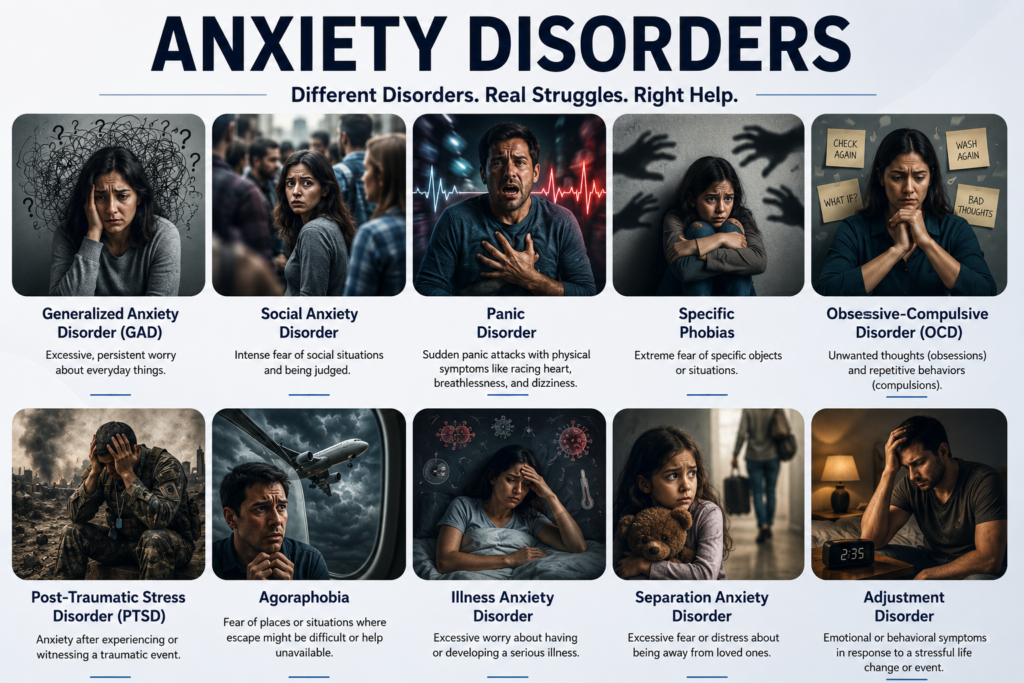
Types of Anxiety Disorders We Treat in Mumbai
Dr. Pavan Sonar specializes in diagnosing and treating the full spectrum of anxiety disorders at his clinics in Borivali West, Malad West, and Andheri West:
Generalized Anxiety Disorder (GAD)
GAD involves persistent, excessive worry about everyday matters — work, finances, health, or relationships — that feels difficult to control. Patients often report restlessness, muscle tension, and fatigue that build up over months. Dr. Sonar’s clinics in Borivali, Malad, and Andheri West help patients identify worry triggers and build practical coping strategies to regain a sense of calm.
Panic Disorder
Characterized by sudden, intense episodes of fear accompanied by physical symptoms like chest tightness, breathlessness, or dizziness, panic disorder can leave patients avoiding public places or Mumbai’s crowded local trains out of fear of another attack. Targeted treatment helps patients understand the biology behind panic and regain confidence in daily situations.
Social Anxiety Disorder (Social Phobia)
Social anxiety causes intense fear of judgment or embarrassment in social or performance settings, often leading to avoidance of gatherings, meetings, or public speaking. Many young professionals across Mumbai struggle silently with this condition. Structured therapy helps patients build confidence and re-engage with social and professional life.
Obsessive-Compulsive Disorder (OCD)
OCD involves intrusive, unwanted thoughts (obsessions) paired with repetitive behaviours or mental rituals (compulsions) performed to ease distress. It can significantly disrupt routines, relationships, and work. Dr. Sonar uses evidence-based exposure and response prevention techniques alongside medication where appropriate.
Health Anxiety (Hypochondria)
Health anxiety involves persistent worry about having a serious illness despite little or no medical evidence, often leading to frequent doctor visits or, conversely, avoidance of medical care altogether. Treatment focuses on addressing the underlying fear patterns rather than just the physical concerns.
Agoraphobia
Agoraphobia is fear of situations where escape might be difficult — crowded markets, public transport, or open spaces — often developing alongside panic disorder. In a densely populated city like Mumbai, this can severely limit independence. Gradual, supported exposure therapy helps patients safely reclaim these spaces.
Separation Anxiety Disorder
While often associated with children, separation anxiety can affect adults too, causing excessive distress when apart from loved ones or home. Dr. Sonar’s approach includes family-inclusive strategies and, for younger patients, child-friendly therapeutic techniques.
Post-Traumatic Stress Disorder (PTSD)
PTSD can develop after experiencing or witnessing a traumatic event, leading to flashbacks, hypervigilance, and emotional numbness. Compassionate, trauma-informed care combined with CBT and, when needed, medication helps patients process trauma and rebuild a sense of safety.
Specific Phobias
Specific phobias involve an intense, persistent, and often irrational fear of a particular object, animal, or situation — a fear disproportionate to any actual danger involved. Even anticipating contact with the feared trigger can cause significant anxiety, sweating, a racing heart, or a strong urge to avoid the situation entirely, sometimes disrupting work, travel, or social life in the process.
Some of the most common specific phobias Dr. Sonar treats include:
- Acrophobia (fear of heights) — avoiding balconies, terraces, elevators with glass walls, or high floors, which can be especially
- Claustrophobia (fear of enclosed spaces) — distress in lifts, crowded local trains, small rooms, or MRI machines.
- Aviophobia (fear of flying) — intense anxiety before or during air travel, sometimes leading to avoidance of flights altogether.
- Trypanophobia (fear of injections or needles) — which can lead to avoidance of essential medical care and vaccinations.
- Zoophobia (fear of animals) — such as dogs, insects, or specific creatures, common among both children and adults.
- Social situational phobias — like fear of public speaking or performance, which overlaps with but is distinct from generalized social anxiety.
- Fear of blood or medical procedures (hemophobia) — which can cause fainting or panic during routine check-ups or blood tests.
Left untreated, specific phobias tend to persist for years and can quietly shrink a person’s world as they reorganize daily life around avoidance. The good news is that specific phobias respond exceptionally well to treatment. Dr. Sonar uses graded exposure therapy — gradually and safely introducing patients to the feared trigger in a controlled, supportive way — often combined with relaxation techniques and, in select cases, short-term medication support. Most patients see meaningful improvement within a relatively short course of treatment, regaining the freedom to travel, commute, and go about daily life without fear dictating their choices.
Symptoms of Anxiety Disorders
Recognizing the signs of anxiety is the first step to seeking help. Common symptoms include:
💓
Physical Symptoms
Racing heart, trembling, sweating, shortness of breath, muscle tension, fatigue, headaches
🧠
Cognitive Symptoms
Excessive worry, difficulty concentrating, negative thinking, fear of losing control, indecisiveness
😰
Emotional Symptoms
Restlessness, irritability, dread, sense of impending doom, feelings of helplessness
If you have been experiencing these symptoms for more than six months and they interfere with your daily life, work, or relationships, please consult Dr. Pavan Sonar for anxiety treatment in Mumbai today.
Our Approach to Anxiety Treatment in Mumbai
At Dr. Pavan Sonar’s clinic, we believe in a personalised, holistic approach to anxiety treatment. No two patients are the same, and our treatment plans are carefully designed around your history, severity of symptoms, lifestyle, and goals.
Why Dr. Pavan Sonar is the Best Psychiatrist in Mumbai for Anxiety
🏆
22+ Years Experience
Senior Consultant Psychiatrist & Sexologist with over two decades of clinical experience in Mumbai.
👥
50,000+ Patients Treated
Trusted by thousands of patients across Mumbai for compassionate, confidential mental health care.
🔒
100% Confidential
Your privacy is our top priority. All consultations are strictly confidential and conducted in a safe space.
🗺️
Multiple Clinic Locations
Conveniently located clinics in Borivali West, Malad West, and Andheri West for easy access across Mumbai.
💬
Online Consultations Available
Telepsychiatry options for patients who prefer the convenience of consulting from home.
🩺
Holistic, Evidence-Based Care
Combining modern psychiatry, CBT, mindfulness, and lifestyle medicine for comprehensive healing.
How Anxiety Disorders Impact Daily Life in Mumbai
Living with untreated anxiety in a high-pressure city like Mumbai can be debilitating. The city’s fast pace, long commutes, competitive work environments, and social expectations create unique stressors that can amplify anxiety symptoms. Patients often describe:
- Avoiding the local train or crowded public places due to panic attacks
- Struggling to perform at work due to concentration difficulties and excessive worry
- Withdrawing from social gatherings and family events
- Sleep disturbances leading to chronic fatigue and lowered immunity
- Strained personal and professional relationships
- Self-medicating with alcohol or substances to cope, leading to dependency
Early intervention with professional anxiety treatment in Mumbai can prevent these consequences and help you build resilience for long-term well-being.
Treatment Methods Used
At Dr. Pavan Sonar’s clinic, anxiety treatment in Mumbai is tailored to each patient’s specific needs, severity, and lifestyle. As the best psychiatrist in Mumbai for anxiety, Dr. Sonar employs a comprehensive, evidence-based approach combining multiple therapeutic modalities for lasting recovery.
1. Cognitive Behavioural Therapy (CBT)
CBT is the gold-standard, first-line psychological treatment for anxiety disorders. In our Mumbai clinic, CBT sessions help patients identify and restructure negative thought patterns that fuel anxiety. Patients learn practical coping skills to manage worry, face feared situations, and reduce avoidance behaviours — leading to measurable, long-lasting improvement.
2. Medication Management (Pharmacotherapy)
When clinically indicated, Dr. Pavan Sonar prescribes carefully selected anti-anxiety medications or antidepressants (such as SSRIs or SNRIs) that are safe, non-addictive, and highly effective. Medication is always combined with therapy for optimal outcomes. Regular follow-up ensures dosage is appropriate and side effects are minimised.
3. Exposure Therapy
For phobias, social anxiety, and OCD-related anxiety, structured exposure therapy is used to gradually and safely confront feared triggers. Under expert psychiatric guidance, patients build tolerance and confidence, reducing the power that anxiety holds over their daily life in Mumbai’s demanding environment.
4. Mindfulness-Based Stress Reduction (MBSR)
Mindfulness techniques — including breathing exercises, body scanning, and guided meditation — are integrated into anxiety treatment plans. These evidence-based practices calm the nervous system, reduce cortisol levels, and improve emotional regulation, making them particularly effective for patients managing high-pressure Mumbai lifestyles.
5. Panic Disorder Management
Patients experiencing recurrent panic attacks receive specialised treatment including psychoeducation, interoceptive exposure, and breathing retraining. Understanding the physiology of panic attacks removes their power, and our structured protocol helps patients regain control rapidly.
6. Lifestyle Medicine & Sleep Optimisation
Anxiety is deeply connected to sleep quality, nutrition, and physical activity. Dr. Sonar provides evidence-based guidance on sleep hygiene, exercise routines, dietary adjustments, and reducing stimulants — all of which directly reduce anxiety severity. Addressing sleep disorders alongside anxiety leads to faster, more complete recovery.
7. Relaxation Techniques & Biofeedback
Progressive muscle relaxation (PMR), diaphragmatic breathing, and guided imagery are taught as self-help tools patients can use anywhere — at work, on the Mumbai local train, or at home. These techniques provide immediate relief during anxious moments and build long-term resilience.
8. Online Telepsychiatry for Anxiety
For patients unable to visit our clinics in Borivali, Malad, or Andheri West, Dr. Pavan Sonar offers secure online psychiatrist consultation in Mumbai for anxiety treatment — available 7 days a week via video call, completely confidential and as effective as in-person sessions.
Clinic Locations for Anxiety Treatment in Mumbai
📍
Borivali West
Galaxy Multispeciality Hospital, 1st floor polyclinic, Building-12, Carter Road, near Dattpada, Borivali East, Mumbai, Maharashtra 400066
📍
Malad West
S.V. Road, Malad West, Mumbai 400064
📍
Andheri West
Bellevue Hospital, New Link Road, Andheri West, Mumbai 400053
📍
Malad East
New Sanjeevani Hospital, Kedarmal Road, Malad East
Frequently Asked Questions – Anxiety Treatment in Mumbai
Below are the most common questions patients ask about anxiety treatment in Mumbai. If you have additional questions, you can contact Dr. Pavan Sonar’s clinic directly or book a consultation online.
Q1. What is the best treatment for anxiety disorder in Mumbai?
The best anxiety treatment in Mumbai combines Cognitive Behavioural Therapy (CBT) with medication management when needed, personalised lifestyle guidance, and mindfulness-based techniques. Dr. Pavan Sonar creates individualised treatment plans at his clinics in Andheri West, Malad West, and Borivali West, ensuring each patient receives the most effective, evidence-based care for their specific type of anxiety disorder.
Q2. How long does anxiety treatment take to show results?
Many patients experience noticeable improvement within 4–8 weeks of starting treatment. The duration varies depending on the type and severity of anxiety — mild to moderate anxiety often responds well within 3–6 months of consistent therapy and medication, while more complex cases like OCD or PTSD-related anxiety may require longer treatment. Dr. Sonar reviews progress at every follow-up visit and adjusts the treatment plan accordingly.
Q3. Are anxiety medications safe? Will they make me dependent?
Modern anti-anxiety medications prescribed by Dr. Pavan Sonar — primarily SSRIs and SNRIs — are non-habit-forming, safe for long-term use, and highly effective. Unlike older benzodiazepine tranquillisers, these medications do not cause dependency when used as prescribed. All medications are carefully selected based on the patient’s health history, and the dosage is regularly reviewed for safety and effectiveness.
Q4. Can anxiety be completely cured?
Yes, many patients achieve complete remission from anxiety disorders with the right treatment. For others, anxiety becomes well-managed — no longer interfering with daily life, work, or relationships. The key is early intervention and a consistent, comprehensive treatment approach. Dr. Pavan Sonar’s patients across Mumbai report significant improvement in quality of life, confidence, and overall wellbeing after treatment.
Q5. What types of anxiety disorders does Dr. Pavan Sonar treat?
Dr. Sonar treats the full spectrum of anxiety disorders, including Generalised Anxiety Disorder (GAD), Panic Disorder, Social Anxiety Disorder, Specific Phobias, Health Anxiety (Hypochondria), OCD (Obsessive-Compulsive Disorder), Separation Anxiety, Agoraphobia, and Post-Traumatic Stress Disorder (PTSD). Comprehensive assessment ensures accurate diagnosis and the most effective treatment plan.
Q6. Is online consultation for anxiety as effective as in-person visits?
Yes. Research consistently shows that telepsychiatry for anxiety disorders is equally effective as in-person consultations for most patients. Dr. Pavan Sonar offers secure, confidential online psychiatrist consultation in Mumbai for anxiety — available 7 days a week via video call, ideal for patients in Navi Mumbai, Thane, or those with busy schedules who prefer consulting from the comfort of home.
Q7. How do I know if I need to see a psychiatrist for anxiety?
You should consult the best psychiatrist in Mumbai for anxiety if your worry or fear is persistent (lasting more than 6 months), interferes with work, relationships, or daily activities, causes physical symptoms like racing heart or breathlessness, leads you to avoid situations or places, or if anxiety is affecting your sleep and quality of life. Early consultation leads to faster, more complete recovery — do not wait until anxiety becomes debilitating.
Q8. Does Dr. Pavan Sonar offer anxiety treatment for children and teenagers?
Yes. Dr. Pavan Sonar is also a specialist in child psychiatry in Mumbai and provides age-appropriate anxiety assessment and treatment for children and adolescents. Separation anxiety, school refusal, social anxiety, and exam-related anxiety in young patients are managed with child-friendly CBT, parental guidance, and when appropriate, medication under careful supervision.
Q9. What is the consultation fee for anxiety treatment at Dr. Pavan Sonar’s clinic?
Consultation fees start at ₹5,000 — the basic minimum for a single visit of around 40 minutes — and increase based on the time given, priority, and privacy given (in-person or online). Please contact the clinic directly for current fee details and appointment availability. Dr. Pavan Sonar practices at multiple locations across Mumbai — Andheri West, Malad West, Malad East, and Borivali West — making expert anxiety care accessible across the city.
Q10. Is the consultation confidential?
Absolutely. Patient confidentiality is the highest priority at Dr. Pavan Sonar’s clinic. All consultations — whether in-person or online — are strictly private, conducted in safe, non-judgmental spaces. No personal information or case details are ever shared without explicit patient consent, in full compliance with Indian medical ethics and the Mental Healthcare Act, 2017.