Book Appointment Now
How AI Like ChatGPT Is Changing Mental Health in Mumbai

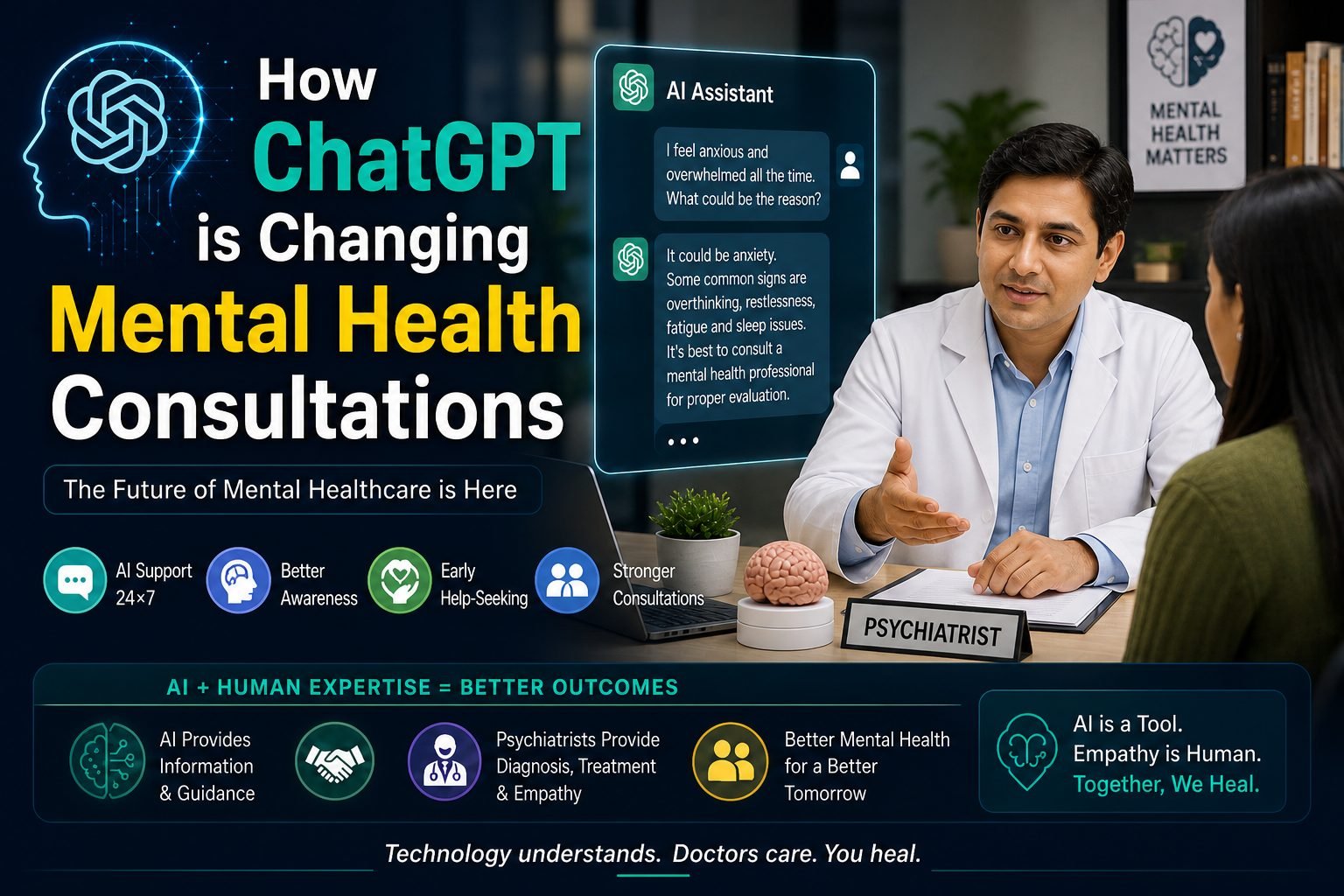
The emergence of powerful AI language models like ChatGPT has transformed how millions of people in Mumbai — and globally — access health information, including mental health information. This transformation has both opportunities and significant risks that every mental health patient and professional needs to understand. Dr. Pavan Sonar (MBBS, DNB, DPM), a psychiatrist in Mumbai, examines how AI is changing mental health consultations and where the boundaries of AI and human clinical expertise must be drawn.
How Mumbai Residents Are Already Using AI for Mental Health
AI tools are already being used by Mumbai residents in multiple mental health contexts: searching symptoms and getting preliminary information about possible diagnoses; accessing psychoeducation about conditions like depression, anxiety, and OCD; using AI chatbots as journalling tools or for expressing distressing thoughts; seeking “therapy-like” conversations when professional care feels inaccessible; and researching medications and their side effects. These uses span from harmless to potentially dangerous — and distinguishing between them requires clear understanding of what AI can and cannot reliably do.
Legitimate Benefits of AI in Mental Health Access
AI tools offer genuine benefits: dramatically improved access to mental health information for Mumbai residents who would not otherwise seek it; reduced stigma in exploring mental health topics anonymously before seeing a professional; psychoeducation delivery at scale; and the potential for AI-assisted symptom screening tools that direct people toward appropriate professional care. When AI tools improve the likelihood of people eventually seeking qualified professional help, they serve mental health access.
The Critical Limitations and Risks
AI language models have fundamental limitations in mental health contexts: they cannot perform clinical risk assessment for suicide or self-harm; they can confidently produce incorrect medical information; they have no accountability for outcomes; they cannot adapt to non-verbal cues and cultural context the way a trained clinician does; they have no relationship continuity — each conversation is typically independent; and they cannot prescribe, diagnose, or provide the therapeutic relationship that is central to psychological treatment outcomes. For genuine psychiatric assessment and treatment in Mumbai, visit the services page.
Dr. Sonar’s Perspective: AI as a Bridge, Not a Destination
The most constructive role for AI in Mumbai’s mental health landscape is as a bridge to professional care — helping people recognise their symptoms, reduce stigma, and find qualified professionals — not as an end destination for mental health care. The moment an AI tool is being used instead of professional care for a clinical condition, it is being used inappropriately and potentially harmfully.
Book Qualified Psychiatric Care in Mumbai
Dr. Pavan Sonar — MBBS, DNB, DPM — Outlook Best Doctors Award — provides expert human psychiatric care in Mumbai. AI cannot replace this. Call +91 85918 40141. Online consultations available. Visit homepage.