Book Appointment Now

Best Psychiatrist in Mumbai For Depression Treatment – Dr. Pavan Sonar
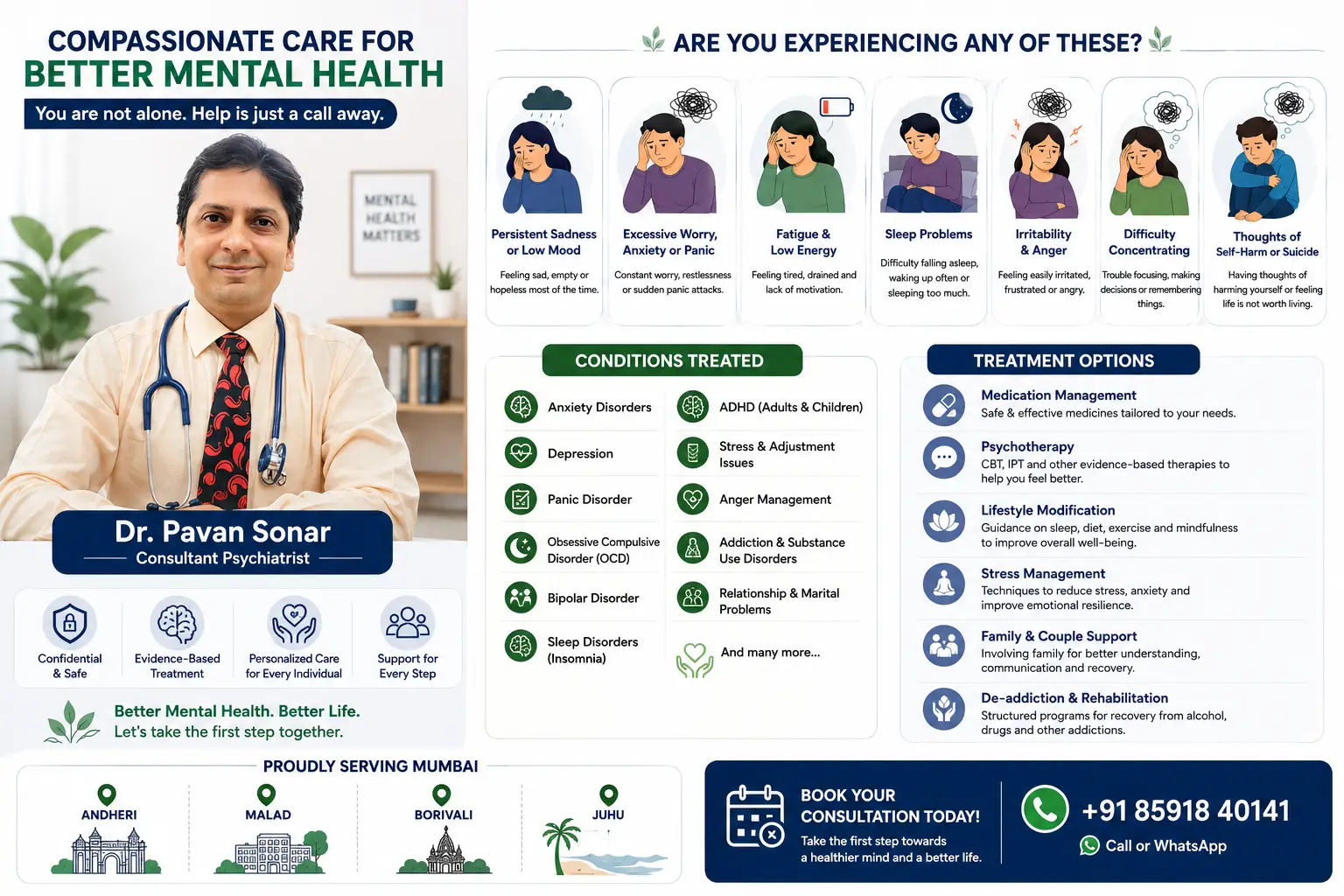
Best Treatment For Depression In Mumbai- What is Depression? Understanding the Condition
Depression — clinically known as Major Depressive Disorder (MDD) — is far more than ordinary sadness. It is a serious medical illness affecting brain chemistry, thought patterns, and physical health simultaneously. According to the World Health Organisation, approximately 56 million Indians live with depression, making it the leading cause of disability in the country. Yet in Mumbai and across India, social stigma means the vast majority never seek professional help.
The critical distinction is this: grief and low mood are normal human experiences that resolve on their own. Depression, by contrast, persists for weeks or months, intensifies over time without treatment, and profoundly disrupts a person’s ability to work, maintain relationships, and carry out daily activities. It is not a character flaw, a phase, or something you can simply “snap out of.” Depression is a medical condition — and like diabetes or high blood pressure, it responds well to the right medical treatment.
Take a Quick Self-Assessment
Wondering if your symptoms might be clinical depression? Use this non-diagnostic checklist to see if you should consider a professional consultation.
Types of Depression Treated in Mumbai
Depression is not a single uniform illness. Dr. Pavan Sonar’s Mumbai clinics provide expert diagnosis and treatment for the full spectrum of depressive disorders:
- Major Depressive Disorder (MDD): The most common form — characterised by persistent low mood, loss of interest, and physical symptoms lasting two weeks or more.
- Persistent Depressive Disorder (Dysthymia): A longer-lasting but lower-intensity depression that can persist for years if untreated.
- Postpartum Depression: Affects new mothers in the weeks and months after childbirth — requires prompt psychiatric intervention.
- Women’s Mental Health: Depression in adult females often manifests alongside hormonal changes or life transitions. Dr. Sonar provides specialized care for female sexual health concerns related to depression.
- Treatment-Resistant Depression: Cases where standard antidepressants have not produced improvement — Dr. Sonar specialises in augmentation strategies.
- Depression with Anxiety: Comorbid anxiety and depression is extremely common in India’s high-stress urban environment.
Recognising the Symptoms of Depression
Many patients in Mumbai miss the signs of clinical depression, mistaking it for “stress” or “laziness.” Depression manifests across emotional, physical, and cognitive domains:
Emotional Symptoms
- Persistent sadness, emptiness, or hopelessness
- Loss of interest or pleasure in hobbies and activities once enjoyed
- Feelings of worthlessness or excessive guilt
- Irritability, frustration, or restlessness
- Thoughts of death or suicide (requires immediate help)
Physical Symptoms
- Persistent fatigue and loss of energy
- Sleep disturbances — insomnia or sleeping excessively
- Changes in appetite and weight
- Unexplained physical pain — headaches, back pain, digestive issues
- Psychomotor slowing — moving and thinking more slowly than usual
What Causes Depression? Risk Factors in the Mumbai Context
- Biological factors: Imbalances in brain neurotransmitters, genetic predisposition, and hormonal changes.
- Mumbai-specific stressors: Long commutes, high cost of living, and social isolation. The modern “loneliness pandemic” is a significant driver; learn more about the importance of combined psychiatric and psychotherapeutic care.
- Life events: Divorce, bereavement, or job loss can trigger a depressive episode.
How Dr. Pavan Sonar Treats Depression in Mumbai
Dr. Pavan Sonar’s approach to depression treatment is integrative, personalised, and evidence-based — combining biological psychiatry, psychotherapy, and lifestyle medicine.
Ready to take the first step? Call or WhatsApp Dr. Pavan Sonar at +91 8591840141 to book a confidential depression consultation at any of his Mumbai clinics or online.
Frequently Asked Questions — Depression Treatment in Mumbai
Stress is typically tied to a specific trigger and improves when the situation resolves. Depression is characterised by persistent low mood, loss of interest, fatigue, and sleep or appetite changes lasting two weeks or more — regardless of external circumstances. If your symptoms are affecting your work, relationships, or daily life in Mumbai, it is time to consult a psychiatrist for a proper evaluation.
The most effective depression treatment in Mumbai combines psychiatric medication (antidepressants) with evidence-based psychotherapy such as Cognitive Behavioural Therapy (CBT). Dr. Pavan Sonar offers a personalised, integrative approach — tailoring treatment to each patient’s specific type of depression, lifestyle, and goals. Most patients see significant improvement within 4–8 weeks of starting treatment.
Dr. Pavan Sonar is widely regarded as one of the best psychiatrists for depression in Mumbai, with over 22 years of clinical experience. He is recognised by Outlook India as a Best Doctor and holds advanced training in psychotherapy, medication management, and treatment-resistant depression. His clinics are located in Borivali, Kandivali, Santacruz, and Thane, making expert depression care accessible across Mumbai.
The duration of depression treatment varies based on severity and type. Mild to moderate depression often responds within 3–6 months of combined therapy and medication. Severe or treatment-resistant depression may require a longer course of 12–24 months. Dr. Pavan Sonar conducts regular follow-ups to assess progress and adjust treatment plans, ensuring that each patient in Mumbai receives the most effective and timely care possible.
Mild depression can sometimes be effectively managed through psychotherapy (such as CBT), lifestyle changes, regular exercise, and strong social support — without medication. However, moderate to severe depression typically requires antidepressant medication for full recovery. Dr. Pavan Sonar assesses each case individually and only prescribes medication when clinically necessary. The goal is always the least intervention needed for lasting recovery.
Antidepressants are prescription medications that help correct chemical imbalances in the brain — primarily involving serotonin, norepinephrine, and dopamine — that contribute to depression. Modern antidepressants approved in India are safe, non-addictive, and well-tolerated when prescribed by a qualified psychiatrist. Dr. Pavan Sonar carefully selects the right antidepressant for each patient, monitors for side effects, and adjusts doses as needed throughout the treatment journey in Mumbai.
Yes. Dr. Pavan Sonar offers confidential online psychiatry consultations for depression across Mumbai and all of India. Online sessions are equally effective for diagnosis, therapy, and medication management. This option is ideal for patients with busy schedules, mobility challenges, or those living far from Dr. Sonar’s physical clinics in Borivali, Kandivali, Santacruz, and Thane. Call or WhatsApp +91 8591840141 to book your online appointment today.
Postpartum depression (PPD) is a serious form of clinical depression that affects new mothers within weeks to months after childbirth. Symptoms include persistent sadness, extreme fatigue, difficulty bonding with the baby, anxiety, and sometimes thoughts of self-harm. PPD is a medical condition — not a personal failure — and responds well to psychiatric treatment. Dr. Pavan Sonar provides specialised, compassionate postpartum depression care for mothers across Mumbai, combining medication and psychotherapy in a supportive environment.
Key warning signs of depression in a loved one include persistent withdrawal from social activities, changes in sleep or eating habits, declining performance at work or school, unexplained irritability, hopelessness, loss of interest in hobbies, and in severe cases, talk of death or suicide. If you notice these signs lasting more than two weeks, encourage them to speak with a psychiatrist. Dr. Pavan Sonar also offers family consultation sessions to help loved ones understand and support those with depression in Mumbai.
The cost of depression treatment in Mumbai varies depending on the type of consultation, frequency of sessions, and whether medication is required. Dr. Pavan Sonar offers transparent, affordable consultation fees starting at ₹5,000 — the basic minimum for a single visit of around 40 minutes — and increase based on the time given, priority, and privacy given, with no hidden charges. Both in-clinic appointments at his Borivali, Kandivali, Santacruz, and Thane locations and online video consultations are available. To know the current consultation fee or to book an appointment, call or WhatsApp Dr. Sonar’s team at +91 8591840141.
Dr. Pavan Sonar offers online psychiatrist consultation in Mumbai for depression — secure video sessions available 7 days a week, from anywhere in Mumbai, Thane, or Pune.