Book Appointment Now

Migraine Explained: Symptoms, Causes & the Best Migraine Treatment in Mumbai

If you have ever had to cancel plans, hide away in a dark silent room, or push through an entire workday with what feels like a hammer pounding behind your eye, you already know that migraine is nowhere close to being “just a bad headache.” It is a complex neurological condition that can hijack your entire day, and for many people it returns again and again, sometimes weekly, sometimes monthly, sometimes without any warning at all. In this guide, we will walk through what migraine really is, how to recognise its symptoms, the way it quietly reshapes everyday life, what triggers it, and how the best migraine treatment in Mumbai can help you take back control of your days.
What Exactly Is a Migraine?
A migraine is a neurological disorder, not simply a severe headache. It involves changes in brain activity that affect blood flow, nerve signalling, and the way your brain processes pain, light, sound, and even smell. An episode can last anywhere from a few hours to several days, and no two people experience it in quite the same way. Some people get an early warning sign called an “aura”, such as flashing lights, blind spots, or tingling sensations, while others move straight into the pain phase without any warning at all. What makes migraine particularly frustrating is that it rarely follows a fixed pattern, so a person might go weeks without an episode and then suddenly have three attacks in a single week, making it genuinely difficult to plan work, travel, or family life.
Common Symptoms of Migraine
Migraine symptoms usually unfold in phases, and learning to recognise them early can help you manage an attack before it fully takes over your day.
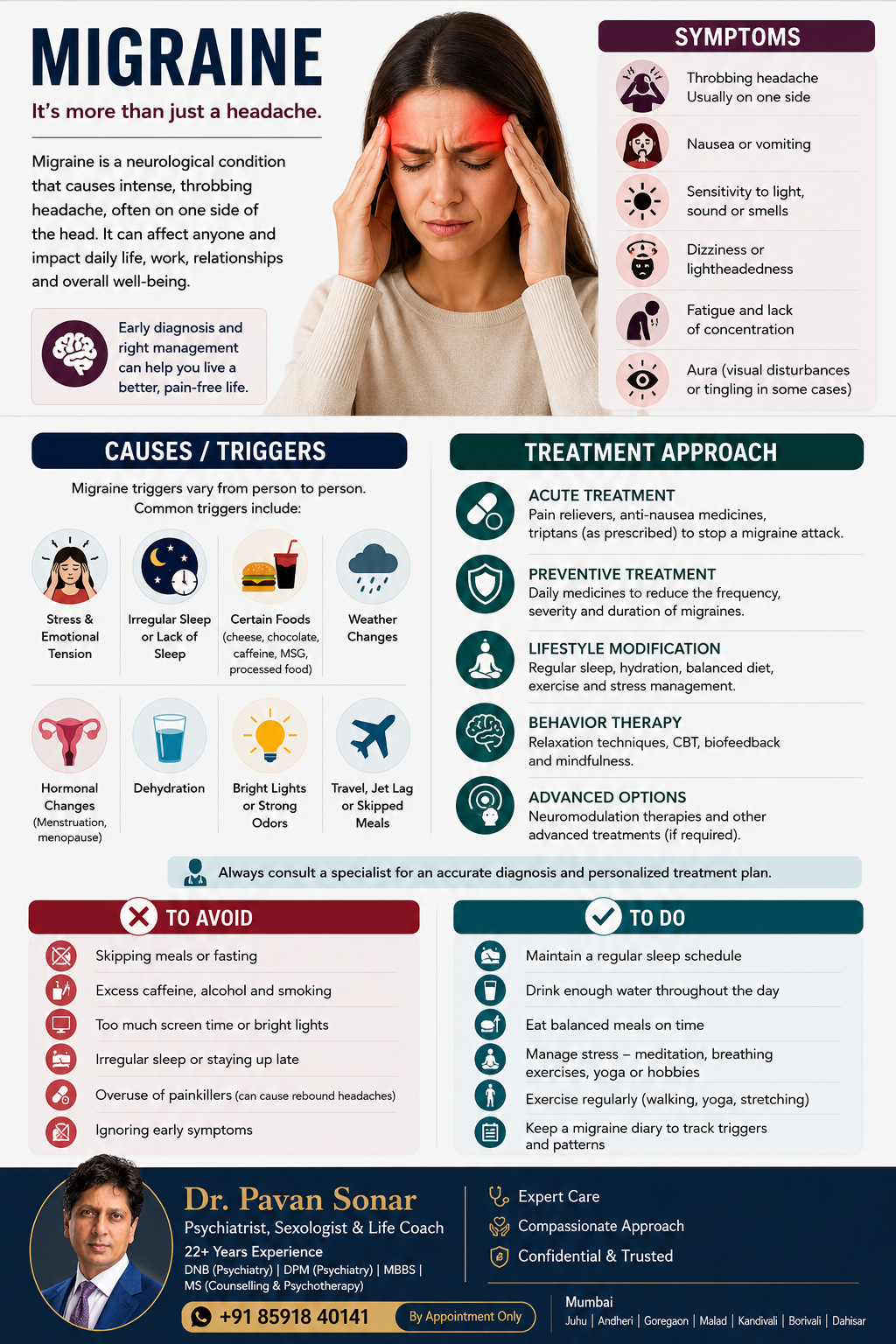
- Throbbing or pulsing pain, usually concentrated on one side of the head
- Sensitivity to light, sound, and sometimes strong smells
- Nausea, vomiting, or a sudden loss of appetite
- Visual disturbances such as flashing lights, zigzag lines, or temporary blind spots, known as aura
- Neck stiffness or tenderness in the day or two before an attack begins
- Fatigue, irritability, or difficulty concentrating, often described as brain fog
- Dizziness or a general feeling of being off balance
Not everyone experiences every symptom on this list, and intensity can range from mildly annoying to completely debilitating. Some people also experience what is called a “postdrome” phase after the pain fades, where they feel drained, foggy, or emotionally flat for a day or more.
How Migraine Quietly Takes Over Everyday Life
People who have never experienced a migraine often assume it is something you can simply push through with a painkiller and a bit of willpower. Anyone who actually lives with migraine knows that is far from the truth. It affects work, relationships, sleep, finances, and self-confidence, often in ways that are invisible to the people around you.
At work, migraine can mean missed deadlines, cancelled meetings, or having to step away from a screen that suddenly feels blinding. Many people quietly build their entire calendar around the fear of an attack, avoiding late nights, skipping social events, or turning down travel opportunities. Sleep often suffers too, since pain and nausea can keep you up at night, which in turn makes you more vulnerable to the next episode, creating a difficult cycle to break.
Relationships can strain under the weight of cancelled plans and the guilt that comes with them. Family members and friends do not always understand why someone who “looked fine yesterday” cannot get out of bed today, and that lack of understanding can leave people feeling isolated or even doubted. Over time, the unpredictability of migraine can chip away at confidence, making people anxious about committing to plans at all. This is exactly why proper diagnosis and consistent care from the best doctor for migraine in Mumbai can be life changing, not just symptom relief, but a genuine return to normal living.
What Causes Migraine? Understanding the Triggers
There is no single cause of migraine. Researchers believe it results from a combination of genetics, brain chemistry, and environmental factors that make some people more sensitive to certain triggers than others. Understanding your own personal triggers is one of the most powerful tools you have in managing the condition.
- Hormonal changes, particularly around menstrual cycles, pregnancy, or menopause
- Chronic stress, anxiety, or sudden emotional shocks
- Irregular sleep patterns, whether too little or too much sleep
- Skipping meals or dehydration
- Certain foods and drinks, such as aged cheese, caffeine, alcohol, and processed or packaged foods
- Sensory triggers like bright or flickering lights, loud noise, or strong perfumes
- Weather changes, particularly humidity shifts common in Mumbai during the monsoon
- A family history of migraine, since the condition often runs in families
Because triggers vary so much from person to person, keeping a simple migraine diary noting your food, sleep, stress levels, and the timing of attacks can help you and your doctor spot patterns that are easy to miss otherwise.
Treatment Options: Finding the Best Migraine Treatment in Mumbai
The good news is that migraine is manageable. With the right combination of lifestyle changes, medication, and professional guidance, most people can significantly reduce both the frequency and severity of their attacks. The best migraine treatment in Mumbai usually combines several approaches rather than relying on a single pill or quick fix.
- Acute treatment: Fast-acting medications taken at the first sign of an attack to stop it from progressing or reduce its severity
- Preventive medication: Daily or periodic treatment prescribed for people who experience frequent or severe attacks, aimed at reducing how often they occur
- Lifestyle adjustments: Consistent sleep schedules, regular meals, hydration, and moderate exercise, which together can meaningfully lower attack frequency
- Stress management: Techniques such as mindfulness, breathing exercises, or therapy, since stress is one of the most common triggers
- Trigger avoidance: Identifying and reducing exposure to your personal triggers using a migraine diary
- Advanced options: For chronic or treatment-resistant migraine, newer approaches such as nerve blocks or targeted therapies may be recommended by a specialist
Why Choosing the Best Doctor for Migraine in Mumbai Matters
Migraine can look different from one person to the next, which is why self-medicating with over-the-counter painkillers often stops working over time, or can even lead to a separate problem called medication-overuse headache. Working with the best doctor for migraine in Mumbai means getting a proper diagnosis, ruling out other causes of headache, and receiving a treatment plan tailored to your specific triggers, lifestyle, and medical history rather than a generic one-size-fits-all approach.
A skilled specialist will also look beyond the headache itself, considering how sleep, mental health, hormones, and daily habits interact with your migraine pattern. This kind of comprehensive, one-on-one care is often what makes the real difference between simply coping with migraine and genuinely getting your life back.
When Should You See a Doctor?
Occasional mild headaches usually do not need specialist attention, but certain signs suggest it is time to book an appointment rather than wait it out.
- Your headaches are becoming more frequent, more severe, or lasting longer than before
- Over-the-counter medication no longer provides relief, or you find yourself relying on it several times a week
- Migraine is interfering with work, sleep, or relationships on a regular basis
- You experience a sudden, unusually severe headache unlike any you have had before
- New symptoms appear, such as confusion, weakness, or vision changes that do not resolve
If any of these sound familiar, reaching out for a professional evaluation is a sensible next step rather than something to postpone.
Frequently Asked Questions About Migraine
What is the fastest way to relieve a migraine?
Resting in a dark, quiet room, applying a cold compress, staying hydrated, and taking prescribed acute medication at the very first sign of an attack tends to work best. The earlier you act, the more effective treatment usually is.
Is migraine a lifelong condition?
For many people, migraine tends to run in phases across a lifetime, sometimes easing with age or after hormonal changes such as menopause. While there is no universal cure, most people achieve excellent long-term control with the right treatment plan.
How do I know if it is a migraine or just a regular headache?
Migraine pain is usually throbbing, often one-sided, and comes with additional symptoms such as nausea or sensitivity to light and sound, whereas a typical tension headache feels more like a dull, constant pressure without these extra symptoms. A proper evaluation is the only reliable way to know for certain.
Which doctor should I consult for migraine in Mumbai?
It is best to consult a specialist experienced in diagnosing and managing migraine and other headache disorders, since they can assess your full history, rule out other causes, and build a personalised plan rather than offering generic advice.
Can stress alone cause migraines?
Stress is one of the most commonly reported triggers, but it usually combines with other factors such as poor sleep or irregular meals to bring on an attack. Managing stress through relaxation techniques or professional support often reduces attack frequency noticeably.
Are migraines hereditary?
Yes, migraine often runs in families, and having a parent with migraine noticeably increases the likelihood of experiencing it yourself. Genetics is only part of the picture though, since lifestyle and environmental triggers also play a significant role.
Final Thoughts
Migraine is a real, treatable medical condition, not a character flaw or something you simply have to endure in silence. If headaches have been quietly running your calendar, stealing your energy, or keeping you from the people and moments you care about, know that effective help is available. With an accurate diagnosis and a treatment plan built around your specific triggers and lifestyle, it is entirely possible to see fewer attacks, milder symptoms, and far more good days than bad ones.
If you have been searching for the best migraine treatment in Mumbai or looking for the best doctor for migraine in Mumbai, consider booking a consultation to discuss your symptoms in detail. A thorough evaluation today can be the first step toward calmer, clearer, pain-free days ahead.