Book Appointment Now

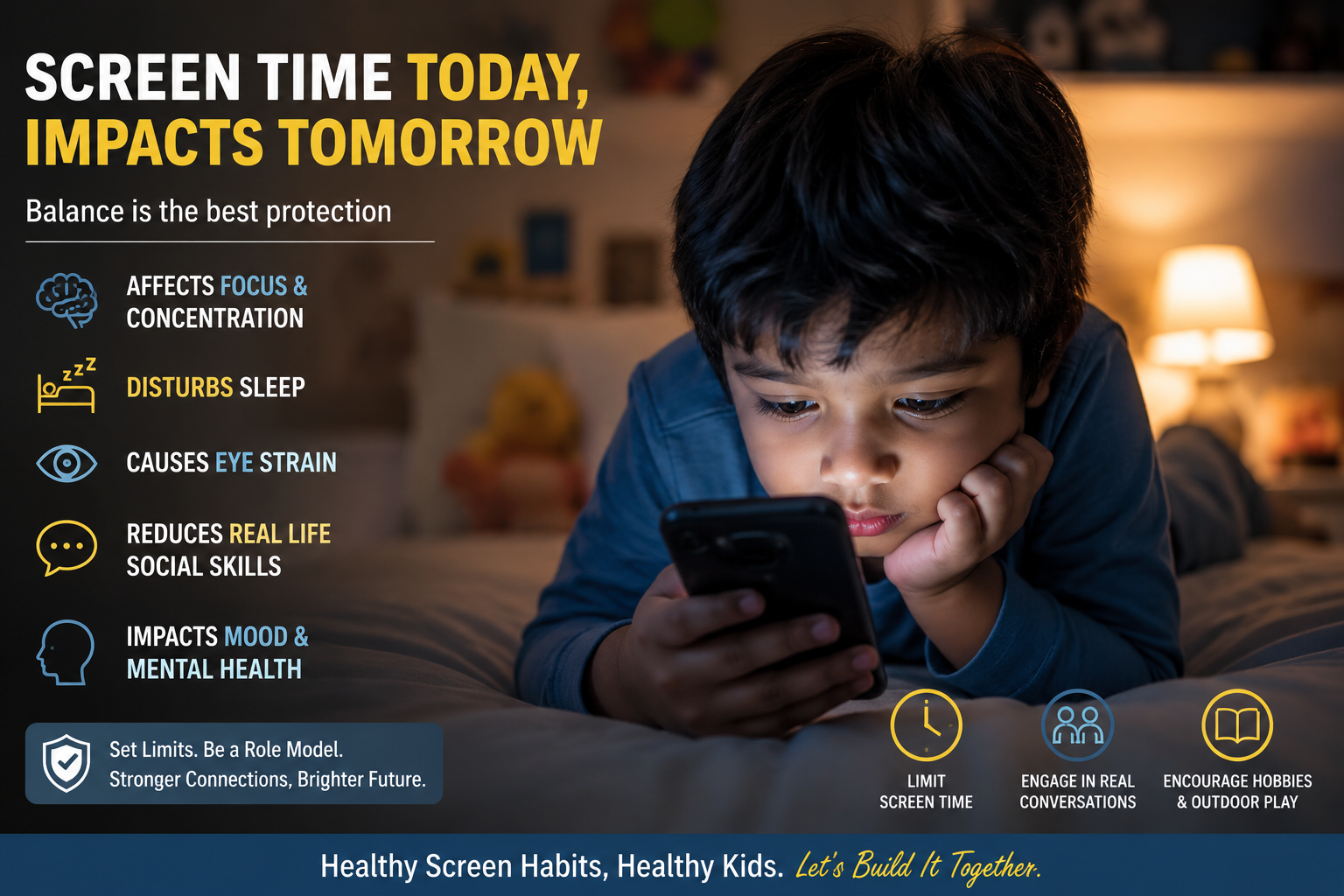
Virtual Autism on the Rise: How Screen Time Is Destroying Your Child’s Brain Development
Virtual autism — autism-like symptoms caused by excessive screen time in toddlers — is rising globally. Learn what it is, how to spot it, and what parents can do. Expert insights by Dr. Pavan Sonar.

By Dr. Pavan Sonar | drpavansonar.com
Last Updated: July 2026 | Reading Time: ~12 minutes
Every day in my clinic, I meet worried parents holding a phone in one hand and a confused child in the other. The story is almost always the same. “Doctor, he doesn’t speak much. He doesn’t make eye contact. He plays alone. Could he be autistic?”
And then comes the question that changes everything: “How much screen time does he get?”
The answer, more often than not, is staggering. Four hours. Six hours. Eight hours. A toddler who has barely learned to walk is spending more time staring at a glowing rectangle than interacting with another human being.
We are living in the middle of a silent epidemic, and most parents don’t even know it has a name.
It’s called virtual autism — and it is on the rise.
What Is Virtual Autism? Understanding the Term
Virtual autism is not a term you’ll find in the DSM-5 (Diagnostic and Statistical Manual of Mental Disorders). It is not a formal clinical diagnosis. But that doesn’t mean it isn’t real. It very much is.
The concept was introduced in 2018 by Romanian psychologist Marius Zamfir, who noticed a troubling pattern: young children — mostly between the ages of zero and three — were presenting with autism-like symptoms, but their behavioral abnormalities seemed directly linked to one environmental factor: excessive screen exposure.
Zamfir defined virtual autism as a condition where children experience “sensory-motor and socio-affective deprivation” caused by more than four hours per day of exposure to virtual environments — television, smartphones, tablets, video games, and similar digital media.
The key distinction? Unlike classical autism spectrum disorder (ASD), which is a lifelong neurodevelopmental condition with genetic and biological roots, virtual autism appears to be environmentally induced. And most importantly — it may be reversible.
That last word is everything. It’s what transforms despair into hope for thousands of families.
Virtual Autism vs. Autism Spectrum Disorder: Know the Difference
Before we go further, it’s important to be very clear about something: virtual autism is not the same as autism.
Autism spectrum disorder (ASD) is a complex neurodevelopmental condition that affects how a person perceives and interacts with the world. It has strong genetic underpinnings, affects people across their entire lifespan, and cannot be “cured” by reducing screen time. Children with ASD deserve proper diagnosis, early intervention, and a lifetime of support and celebration.
Virtual autism, on the other hand, describes a pattern of autism-like symptoms — speech delay, poor eye contact, social withdrawal, repetitive behaviors — that appear in children who are otherwise neurotypical, and whose symptoms seem to emerge from, or worsen significantly due to, prolonged screen exposure during the critical early years of brain development.
Here’s a simple table to understand the differences:
| Feature | Autism Spectrum Disorder (ASD) | Virtual Autism |
|---|---|---|
| Cause | Genetic + neurological | Environmental (screens) |
| Age of onset | Present from birth | Develops during early childhood |
| Reversibility | Not reversible; managed with support | Often reversible with intervention |
| Diagnosis | Formal clinical diagnosis | Not a formal DSM diagnosis |
| Brain wiring | Lifelong neurodivergence | Acquired from lack of stimulation |
This distinction matters enormously — both for families navigating a diagnosis and for clinicians like myself who are seeing more and more children caught in the grey zone between the two.
The Numbers Don’t Lie: A Growing Concern
Let’s look at what the data says, because the numbers are alarming.
75% of children under age 2 in the United States exceed the daily screen time recommendations set by the American Academy of Pediatrics (AAP). Not by a little. By a lot.
A 2024 study published in the International Journal of Pediatrics and Adolescent Medicine specifically examined the relationship between early screen exposure (ages 0–3) and autism-like symptoms, tracking variables like when screen exposure began, how long it lasted, and what type of content was consumed.
A 2025 longitudinal study found that children later identified with autism or elevated ADHD symptoms had experienced more than double the screen time at 18 months of age compared to children without those symptoms.
Research published in PMC (PubMed Central) found that:
– Children who watched more than 2 hours of TV per day before their first birthday were six times more likely to develop a language delay.
– Each additional 30 minutes of handheld screen use increases the likelihood of delayed speech development by 49%.
– Children with screen exposure exceeding 2 hours per day were twice as likely to show developmental delay.
And language delay affects an estimated 5–10% of preschool children globally — a figure that has been climbing in correlation with rising screen usage.
In India, the picture is similarly concerning. With the explosion of affordable smartphones and cheap data plans, millions of toddlers are now routinely handed devices as pacifiers, entertainment tools, or even educational substitutes. Pediatric clinics across the country are reporting a surge in children presenting with communication difficulties, social withdrawal, and behavioral issues — many of whom have excessive screen exposure as their most prominent environmental risk factor.
The epidemic is not coming. It is already here.
Why the First Three Years Matter More Than You Think
To understand why screen time has such a profound impact on very young children, we have to understand what is actually happening inside a child’s brain during the first three years of life.
The human brain is not a finished product at birth. It is a work in progress — the most remarkable, complex, and sensitive construction project in the known universe.
During the first 1,000 days of life, the brain creates more than 1 million new neural connections per second. Synapses form and prune based on experience. The brain is literally being wired by what the child sees, hears, touches, smells, and — most critically — by who the child interacts with.
What builds healthy brain architecture? Human connection.
Face-to-face interaction. The back-and-forth of conversation. A parent’s eyes lighting up. The warmth of being held. The unpredictable chaos of real play. The sound of a voice that changes pitch with emotion.
These are not luxuries. They are neurological necessities.
Now imagine replacing 4, 6, or 8 hours of that rich, multisensory human experience with a flat, two-dimensional screen. A screen that delivers fast-moving images, flickering lights, and repetitive sounds — all highly stimulating, but none of it truly interactive in the way human connection is.
The brain gets flooded with passive input, but starved of the responsive input it desperately needs to build language, social cognition, empathy, and emotional regulation.
This is what researchers mean by “sensory-motor and socio-affective deprivation.” The child is technically being stimulated. But the right kind of stimulation — the kind that builds a healthy brain — is missing.
Signs and Symptoms of Virtual Autism in Children
As a parent or caregiver, knowing the warning signs is your first line of defense. The symptoms of virtual autism closely mirror those of ASD, which is why the two are so easily confused. Here are the most common signs to watch for:
Speech and Language Delays
The child may have fewer words than expected for their age, may not be combining words into phrases, or may have regressed — speaking words they previously used and then stopping. Some children develop what is called “echolalia” — repeating words or phrases from the screen rather than using original language.
Poor Eye Contact
Children with virtual autism often struggle to make or maintain eye contact, both with parents and with strangers. This is one of the most commonly observed symptoms and one of the most distressing for parents.
Social Withdrawal
The child may prefer the company of a screen over real people. They may not respond to their name being calling, show little interest in other children, and seem to “be in their own world.”
Repetitive Behaviors and Restricted Interests
Repetitive movements (hand flapping, rocking), insistence on watching the same video or clip repeatedly, and intense focus on specific screen-based content to the exclusion of other activities.
Reduced Imaginative Play
Children exposed to excessive screen time often show decreased engagement in creative, imaginative play — the kind of open-ended, unscripted play that is essential for cognitive and social development.
Emotional Dysregulation
Intense tantrums when the screen is taken away, difficulty transitioning between activities, and low frustration tolerance are all frequently reported.
Sensory Sensitivities
Hypersensitivity to sounds, lights, or textures, or conversely, seeming under-responsive to sensory input in the environment.
If you recognize several of these symptoms in your child — especially alongside significant screen exposure — please consult a qualified pediatric professional. Do not diagnose your child yourself, and do not panic. Early identification and action make all the difference.
The Science Behind the Screen: What Research Tells Us
The research on this topic has been growing rapidly, and the picture it paints demands our attention.
A 2024 study published in SAGE Journals by Detroja and Bhatia examined early screen exposure and developmental abnormalities, providing strong academic backing for the concept of virtual autism and calling for greater clinical awareness among pediatricians.
A landmark analysis in JAMA Pediatrics found that babies who viewed TV and videos at age one showed a significantly greater chance of displaying autistic-like behaviors by age two compared to children who did not watch television.
A 2025 study published in Frontiers in Pediatrics found that parental screen habits also play a meaningful role — when parents themselves spend more time on screens, parent-child interaction decreases, which further compounds the developmental risk for the child. It’s not just about what children watch. It’s also about what they miss when screens are present.
Research in Cureus published in late 2024 showed a statistically significant correlation between screen time exposure and the probability of developing autism spectrum disorder symptoms, highlighting the need for clinicians to screen for digital media use as part of standard developmental assessments.
One of the most striking pieces of research, published in PMC in 2025, examined toddler screen time longitudinally — meaning they followed the same children over time — and found that early heavy screen exposure was associated not just with autism-like symptoms but also with ADHD-like symptoms and broader developmental setbacks.
The World Health Organization (WHO) and the American Academy of Pediatrics (AAP) both recommend:
– Zero screen time for children under 18–24 months (except video calling)
– Less than one hour per day for children aged 2–5 years, with an adult watching alongside
delines exist because the evidence demands them. And yet, as we’ve already seen, the majority of children in the world are far exceeding them.
Why Parents Resort to Screens: The Honest Conversation
I want to pause here and acknowledge something important, because judgment helps no one.
Parents are exhausted. We are living in an era of fragmented families, long working hours, reduced community support, and relentless pressure. The smartphone or tablet, in these circumstances, is not a failure of parenting. It is often a survival tool.
A mother trying to cook dinner with a screaming toddler hands them a phone. A father working from home in a one-bedroom apartment puts on YouTube Kids to get through a Zoom call. A grandparent who doesn’t speak the child’s language turns on cartoons because it’s the only thing that brings peace.
These are human decisions made under pressure. I understand them.
But understanding something doesn’t make it harmless. And part of my role — as a doctor, and through this platform — is to give you the information you need to make better-informed choices, not to make you feel guilty about the ones you’ve already made.
The question isn’t “Are you a bad parent if your child has had too much screen time?”
The question is: “Now that you know, what can you do?”
Is Virtual Autism Reversible? The Evidence Says Yes
Here is the most important thing I will tell you in this entire article:
For most children, the symptoms of virtual autism can be significantly improved — and in many cases fully resolved — with early intervention.
This is what sets virtual autism apart from ASD. It is not a life sentence. It is a warning signal. And the brain, especially the young, developing brain, is remarkably plastic — meaning it can change, adapt, and rewire itself when given the right environment.
Research by Zamfir himself found that children diagnosed with virtual autism showed notable improvement in communication and social skills once screen time was significantly reduced and replaced with human interaction.
A compelling case study from Prayatna, an early intervention clinic in India, documented a child who presented with classic virtual autism symptoms. When screen time was brought to zero and intensive early intervention was begun, the child showed significant improvement across all developmental domains — language, social skills, emotional regulation, and motor development.
The key variables that determine how complete the recovery is are:
1. Age at which intervention begins — The younger, the better. The brain is most plastic in the first 3–5 years.
2. Severity and duration of screen exposure — A child who has had 2 years of heavy screen use may take longer to recover than one caught at 18 months.
3. Quality and consistency of intervention — Active, face-to-face engagement, speech therapy, play therapy, and sensory activities accelerate recovery.
What Parents Can Do: A Practical Guide
If you are reading this and you’re worried about your child, here is a clear, actionable roadmap.
Step 1: Stop the Screens — Immediately and Completely (for young children)
For children under 3 who are showing developmental concerns, the first intervention is to eliminate screens entirely. Not reduce. Eliminate. This is uncomfortable. Your child will protest loudly. Stay firm. The discomfort is temporary; the benefits are permanent.
Step 2: Flood Their World with Human Interaction
Talk to your child constantly — narrate what you’re doing, sing songs, make silly faces, play peek-a-boo. These simple interactions are the building blocks of language and social cognition. Every word you speak to your child is neural scaffolding.
Step 3: Prioritize Unstructured Play
Give your child open-ended toys — blocks, clay, sand, water, balls. Let them be bored. Boredom is where creativity is born. The brain learns problem-solving, frustration tolerance, and imagination through unstructured play, not through passive screen consumption.
Step 4: Get Outdoors
Nature is the original sensory environment. Sunlight, grass, dirt, wind, and the sounds of birds and traffic provide the multisensory stimulation that developing brains crave. Outdoor play also provides physical activity, which is strongly linked to cognitive development.
Step 5: Seek Professional Evaluation
If your child is showing developmental concerns, seek evaluation from a qualified pediatrician, developmental pediatrician, or child psychiatrist. A proper assessment will help distinguish between virtual autism, ASD, language delay with other causes, and other developmental conditions. You need clarity to act effectively.
Step 6: Consider Early Intervention Therapy
Speech therapy, occupational therapy, and play-based intervention are enormously effective when begun early. If your child is under 6 and showing developmental concerns, do not wait for them to “grow out of it.” Early intervention is the single most impactful thing you can do.
Step 7: Model the Behavior You Want
Children learn by watching. If you are on your phone while your child plays, you are modeling screen behavior. Designate screen-free zones and times in your home — meals, bedtime, the first hour of the morning. Your child’s relationship with screens will largely mirror yours.
The Role of Technology Companies and Society
It would be incomplete to talk about this issue without naming the systems that profit from children’s attention.
The apps and platforms most commonly used by young children are specifically engineered to be addictive. If older children or teens develop compulsive patterns around screens, this may require professional support from a de-addiction specialist. The autoplay features, the bright colors, the intermittent rewards, the endlessly refreshing content — these are not accidents. They are the product of hundreds of millions of dollars in behavioral design, aimed at creating habitual, compulsive engagement.
A two-year-old is not making a choice when they reach for a tablet. They are responding to design that has been optimized to be irresistible to the human reward system. Holding a parent responsible without acknowledging this context is blaming the individual for a systemic problem.
This does not absolve individual action. We must still make better choices for our children. But we should also be pushing for better regulations around children’s digital content, stronger parental control tools, and a culture that normalizes putting devices away.
When to Seek Help: Red Flags to Watch For
The following signs warrant immediate consultation with a healthcare professional:
- No babbling by 12 months
- No single words by 16 months
- No two-word phrases by 24 months
- Not pointing to objects of interest by 14 months
- No response to name by 12 months
- Persistent lack of eye contact or social smile
- Preoccupation with screens to the exclusion of all other activities
ny loss of previously acquired language or social skills at any age
These are not reasons to panic. They are reasons to act — quickly, calmly, and proactively.
Frequently Asked Questions About Virtual Autism
Can screen time actually cause autism?
No. Screen time does not cause autism spectrum disorder, which has genetic and neurological roots. However, excessive screen time in young children can produce autism-like symptoms — a condition referred to as virtual autism — which may be reversible with early intervention.
How much screen time is too much for a toddler?
According to WHO and AAP guidelines, zero screen time is recommended for children under 18–24 months (except video calling), and less than one hour per day for children aged 2–5 years. Any amount significantly beyond these thresholds carries developmental risk.
At what age is a child most vulnerable?
The first three years of life are the most critical period. The brain develops most rapidly during this window, and deprivation of human interaction during this time has the most lasting effects.
How long does it take for virtual autism symptoms to improve?
With consistent elimination of screens and active engagement, many parents report noticeable improvements within weeks to months. Full recovery timelines vary depending on the child’s age, the severity and duration of exposure, and the quality of intervention.
My child already has a lot of screen time. Is it too late?
It is never too late to start, and the earlier you start, the better. Children’s brains are remarkably plastic. Take action now.
A Message to Parents from a Pediatrician
I have been practicing medicine long enough to know that there is no perfect parent. Parenting is hard. Modern parenting, in a hyperconnected, economically pressured, information-overloaded world, is extraordinarily hard.
But I also know this: the children in front of me, the ones who can’t say “mama” at age two and a half, whose eyes slide away when I try to catch their gaze — they are not broken. They are not lost. They are responding to an environment that has given them too little of what they needed most.
And when we change that environment — when we put down the screens, get on the floor, look them in the eyes, sing the songs, read the books, get our hands dirty in the garden together — they come back.
That is the gift of early childhood. That is the resilience of the developing brain. And that is why every conversation we have about virtual autism matters — not to frighten parents, but to empower them.
Your child’s brain is waiting for you. Not for the screen. For you.
Conclusion: The Screen Is Not the Enemy — Neglect of Interaction Is
Virtual autism is not a verdict. It is a wake-up call.
As screens become more embedded in every aspect of modern life, the window of childhood — those irreplaceable first three years when the brain is building itself at breathtaking speed — is being steadily colonized by digital content that cannot give children what they truly need.
The rise of virtual autism is not inevitable. It is the predictable consequence of choices we are making as families, as a society, and as an industry. And it can be reversed — through awareness, through action, and through the radical, revolutionary, profoundly simple act of being present with our children.
Put the phone down. Look up. Your child is right there.
Dr. Pavan Sonar is a pediatric health specialist writing at drpavansonar.com. This article is intended for informational purposes and does not constitute medical advice. If you have concerns about your child’s development, please consult a qualified healthcare professional.
Related Resources on drpavansonar.com
If this article raised concerns about your child’s development, explore these specialist pages:
- Child Psychiatrist in Mumbai — Comprehensive mental health assessment and therapy for children aged 3–18
- ADHD Doctor in Mumbai — Expert diagnosis and treatment for ADHD in children and adults
- Autism Specialist in Mumbai — ASD diagnosis, therapy, and long-term support
- De-Addiction Treatment Mumbai — Behavioural addictions including screen addiction in older children and teens
Dr. Pavan Sonar sees patients at Andheri West, Malad, Borivali, and Kandivali. Call +91 8591840141 or book a consultation online.
Sources and Further Reading
- Early Screen Exposure and Developmental Abnormalities — SAGE Journals, 2024
- Virtual Autism and Excessive Screen Exposure — IJPAM, 2024
- Screen Time for Children Under Three — Mad in America, 2025
- Screen Time and ASD — PMC/Cureus, 2024
- Toddler Screen Time: Autism and ADHD Symptoms — PMC, 2025
- Screen Time Before Age 2 and Autism Risk — PMC, 2024
- Virtual Autism: Signs, Causes — Medical News Today
- Parental Screen Time and Language Delay — Frontiers in Pediatrics, 2025
- Virtual Autism Case Study — Prayatna India
- Screen Time and Neurodevelopment in Preschoolers — PMC, 2025