Book Appointment Now

The Silent Struggle: Mental Health of Doctors — A Doctor’s Day Tribute
The mental health of doctors is a growing crisis. Burnout, depression, and suicide affect physicians at alarming rates. Mumbai psychiatrist Dr. Pavan Sonar explores the silent struggle behind the white coat — and what we must do to support our healers.

Every year on July 1st, India celebrates National Doctor’s Day — a day dedicated to honoring the selfless commitment and sacrifices of medical professionals. While we express gratitude for their expertise and compassion, there is an urgent conversation we must have: the mental health of the very people who safeguard ours. Behind the white coat lies a human being — one who experiences burnout, depression, anxiety, and in the most tragic cases, suicidal ideation. This Doctor’s Day, let us go beyond applause and truly look at the silent struggle that haunts our healers.
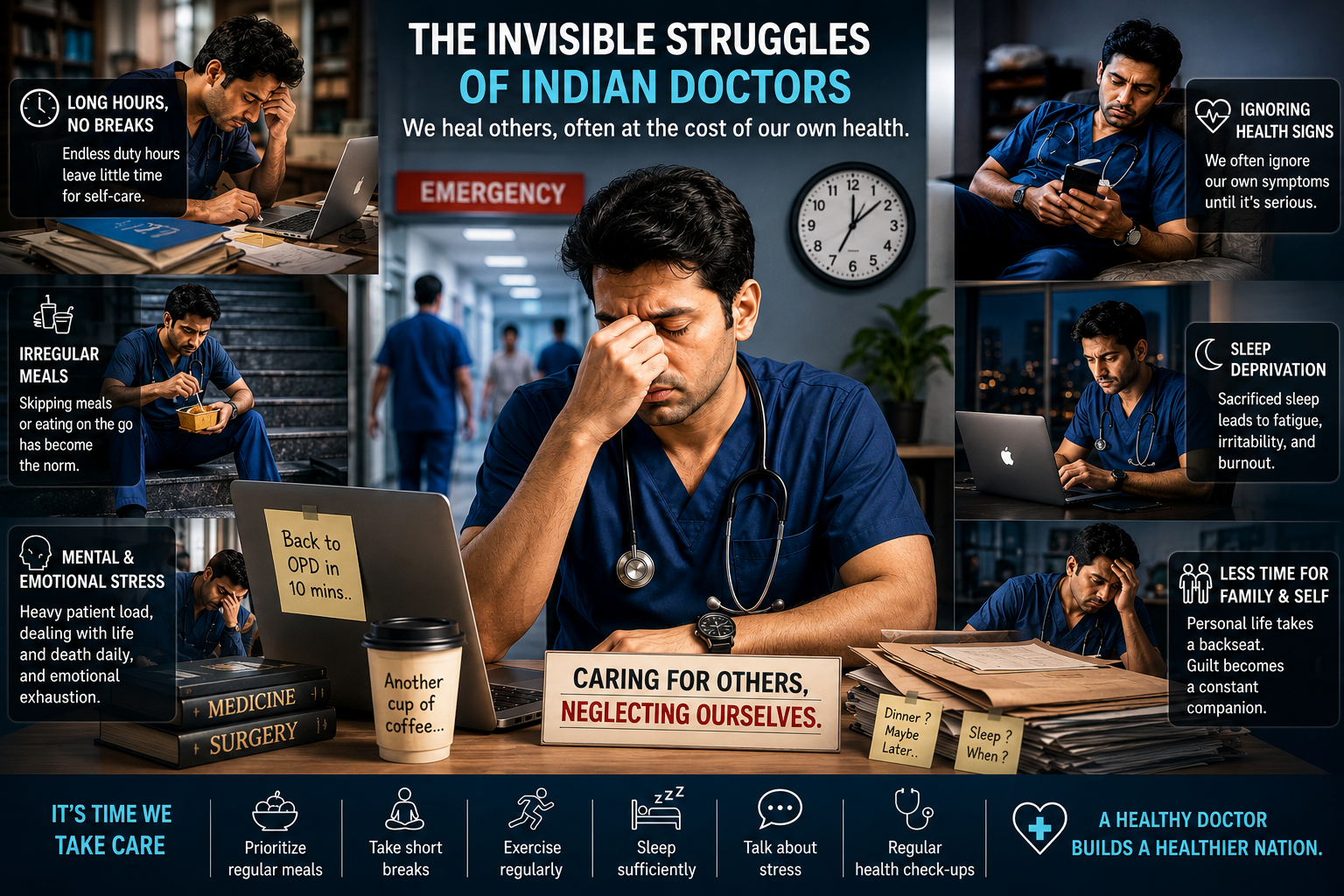
The Hidden Epidemic: Mental Health Crisis Among Doctors
Medicine is often described as a calling — noble, rewarding, and life-giving. And it is all of that. But it is also one of the most psychologically demanding professions in the world. The irony is profound: doctors are trained to diagnose and treat mental illness in others, yet they are among the least likely to seek help for themselves.
Studies from across the globe paint a sobering picture. Physician burnout rates have reached alarming levels — with some research indicating that nearly 50% of doctors experience symptoms of burnout at any given point in their careers. In India, the numbers are no less troubling. A 2019 survey by the Indian Medical Association found that over 80% of doctors reported working beyond their recommended hours, and a significant proportion reported high levels of emotional exhaustion.
The COVID-19 pandemic, which thrust doctors into the spotlight as frontline warriors, further exposed and deepened the mental health wounds that had long been festering in silence. Many physicians witnessed death on a scale they had never encountered before, worked without adequate protective equipment, were separated from their families for months, and carried the immense weight of public expectation — all while running on little sleep, inadequate nutrition, and almost no emotional support.
What Does Doctor Burnout Really Look Like?
Burnout is not simply “being tired.” It is a state of chronic stress that leads to physical and emotional exhaustion, cynicism and detachment, and a sense of ineffectiveness and lack of accomplishment. For a doctor, burnout can manifest as losing the ability to empathize with patients, making medical errors, withdrawing from colleagues, abusing substances, or simply going through the motions without feeling present or purposeful.
Dr. Christina Maslach, the psychologist who developed the widely used Maslach Burnout Inventory, describes burnout as “an erosion of the soul.” For doctors, this erosion often begins subtly — during long residency hours, through the culture of stoicism that pervades medical training, and with the relentless pressure to be perfect. Medical students are often told, implicitly or explicitly, that admitting struggle is a sign of weakness. This toxic narrative follows them into their careers.
Symptoms of burnout in medical professionals may include persistent fatigue that does not improve with rest, emotional numbness or detachment from work and loved ones, increasing cynicism about medicine and patients, chronic irritability or anger, difficulty concentrating or making decisions, physical symptoms like headaches, gastrointestinal problems, or frequent illness, insomnia or disrupted sleep, and withdrawal from professional and social life.
The Numbers That Should Shake Us
The statistics surrounding doctor mental health are deeply alarming and deserve our urgent attention. Physicians have one of the highest suicide rates of any profession. In the United States, approximately 300 to 400 physicians die by suicide every year — that is roughly one doctor per day. Research suggests that female physicians are at an even higher risk, with suicide rates 2.27 times higher than the general female population, while male physicians show rates 1.41 times higher than their male peers.
In India, while comprehensive national data is harder to obtain due to underreporting and stigma, the problem is equally severe. The medical community often buries its grief quietly, reluctant to expose what is seen as a failure. Behind the headlines of doctor shortages, overburdened hospitals, and patient dissatisfaction lies a community of professionals silently drowning.
Depression and anxiety are also disproportionately common. Studies have found that about 25 to 30% of medical residents show signs of clinical depression — significantly higher than in the general population. The tragedy is that, because of the culture of silence and self-reliance, many never seek treatment.
Why Are Doctors Vulnerable?
To understand why doctors are so vulnerable to mental health challenges, we must look at both the systemic and individual factors that place them at risk.
The Weight of Life and Death Decisions: Every day, doctors make decisions that carry life-or-death consequences. The pressure of responsibility — of knowing that a wrong diagnosis, a missed symptom, or a delayed treatment could cost a life — creates a form of chronic psychological stress that is unparalleled in most other professions. Medical errors, even when unavoidable, can trigger guilt, shame, and self-doubt that linger for years.
Prolonged and Irregular Working Hours: Medical training is notoriously grueling. Residents and interns often work shifts of 24 to 36 hours or more, with minimal breaks. Sleep deprivation is not just an inconvenience — it is a known cause of cognitive impairment, emotional dysregulation, and increased risk of depression. Even after training, many practicing doctors continue to work excessively long hours, especially in India where the doctor-to-patient ratio remains critically low.
Exposure to Trauma and Grief: Doctors witness suffering, death, and loss on a regular basis. They hold the hands of dying patients, break terrible news to families, and carry the emotional burden of cases that do not end well. Over time, this repeated exposure to trauma without adequate emotional processing can lead to compassion fatigue — a profound exhaustion of the heart and spirit.
Administrative and Systemic Pressures: The modern healthcare system often buries doctors under mountains of paperwork, electronic health record documentation, insurance claims, and bureaucratic demands that take time away from actual patient care — the very reason most entered medicine in the first place. This disconnect between purpose and practice is a major driver of disillusionment and burnout.
Lack of Control Over Work Environment: Many doctors feel powerless within large hospital systems. Decisions about patient care, staffing, resources, and policies are often made by administrators who may prioritize efficiency and profit over clinical judgment. This erosion of professional autonomy is deeply demoralizing.
Patient Aggression and Violence: In India particularly, incidents of violence against doctors have become disturbingly common. Doctors working in government hospitals and emergency settings face physical assault, verbal abuse, and threats from patients or their relatives — especially when outcomes are unfavorable. This occupational hazard adds another layer of psychological trauma to an already stressful profession.
The Culture of Invincibility: Perhaps the most insidious factor is the culture within medicine itself. Doctors are trained to be competent, confident, and composed at all times. Admitting vulnerability — to colleagues, supervisors, or patients — is often perceived as a professional liability. Medical culture equates seeking help with weakness, and this stigma prevents countless physicians from reaching out when they need it most.
The Particular Struggles of Women in Medicine
Female doctors face a unique set of challenges that compound their mental health vulnerability. Beyond the pressures common to all physicians, women in medicine often navigate gender bias, workplace discrimination, and the expectation that they simultaneously manage careers and households. Studies show that female physicians are frequently interrupted more in clinical settings, paid less than their male counterparts, and passed over for leadership opportunities despite equivalent qualifications.
Pregnancy and motherhood introduce additional stressors. Taking maternity leave in a training program can delay career progression and invite judgment from peers and supervisors. Returning to demanding clinical duties while managing infant care is an exercise in emotional and physical endurance. The guilt of feeling like they are never fully present — either at work or at home — is a burden many women doctors carry silently.
It is perhaps not surprising, then, that female physicians report higher rates of burnout, depression, and suicidal ideation than their male colleagues. This is not because women are less capable — far from it. It is because they are asked to carry more, with less structural support and recognition.
The Stigma That Kills
One of the most dangerous aspects of the mental health crisis in medicine is the stigma attached to seeking help. When a doctor admits to depression or anxiety, they risk having their competence questioned, their patients reassigned, and their careers jeopardized. In many countries, including India, mental health disclosures can affect medical licensing — creating a perverse system where the very act of seeking help could cost a physician their livelihood.
This stigma manifests in various ways: colleagues who dismiss a fellow doctor’s distress with “we all have it hard,” supervisors who equate emotional struggle with professional inadequacy, and institutional cultures that reward endurance over well-being. The message sent — consciously or not — is that suffering in silence is a mark of dedication, while seeking support is a sign of weakness.
The consequences of this stigma are deadly. Doctors who do not receive timely mental health support are at higher risk of burnout progression, substance abuse, medical errors, relationship breakdown, and suicide. Their patients also suffer — because a physician who is mentally exhausted and emotionally depleted cannot provide the quality of care that well-supported, psychologically healthy doctors can.
Substance Use: The Coping Mechanism No One Talks About
In the absence of adequate mental health support, many doctors turn to maladaptive coping mechanisms — most notably, substance use. Alcohol, prescription medications, and in some cases illicit drugs are used to numb emotional pain, induce sleep, or simply get through the day. Physicians, with their knowledge of pharmacology and their access to medications, are at particular risk of prescription drug misuse.
Research suggests that substance use disorders affect approximately 10 to 15% of physicians over the course of their careers — a rate similar to or higher than that of the general population. Anesthesiologists, who have ready access to powerful opioids and sedatives, are among the highest-risk specialty groups. The irony is deeply troubling: the professionals most trusted to manage pain and suffering in others are themselves suffering and medicating in secret.
Substance use in physicians is often missed or ignored because of the same culture of silence that surrounds mental health. Colleagues may notice changes in behavior but hesitate to intervene, fearing they will damage a fellow doctor’s career or reputation. By the time intervention occurs, the addiction may be severe and the damage to the physician’s health and career already significant.
What Medical Institutions Must Do
Addressing the mental health crisis among doctors requires systemic change, not just individual resilience strategies. The responsibility lies not with individual physicians to “toughen up” but with the institutions, healthcare systems, and regulatory bodies that shape the conditions in which doctors work.
Hospitals and medical colleges must implement robust, confidential mental health support services that are freely accessible to all healthcare workers. These should include individual therapy, group support sessions, crisis hotlines, and peer support programs — all free of charge and free of stigma. Mental health days should be recognized and normalized, just as physical sick days are.
Work hours must be regulated and enforced. The practice of expecting doctors to work inhuman hours in the name of dedication must be replaced with structured shift systems that allow for adequate rest, recovery, and personal time. Research consistently shows that well-rested physicians make fewer errors and provide better patient care — making this not just a compassionate policy, but a safety imperative.
Medical education must integrate mental health literacy from the very first year of training. Students should be taught about burnout, compassion fatigue, and mental health conditions with the same seriousness as they learn about physical diseases. They should be encouraged to seek help without fear of judgment, and their mentors and professors should model help-seeking behavior openly.
Legal protections must be established to ensure that seeking mental health treatment does not jeopardize a physician’s license or career. Confidentiality must be guaranteed so that doctors feel safe disclosing struggles without fear of professional consequences. In countries where this barrier exists, legislative reform is urgently needed.
The government and policy-making bodies must also address the structural issues that drive burnout — including the doctor-to-patient ratio, healthcare infrastructure, pay parity, and the rampant problem of violence against healthcare workers. No amount of individual-level intervention will be sufficient if the systemic conditions driving distress are left unchanged.
What Individual Doctors Can Do
While systemic change is essential, individual doctors are not powerless. There is significant strength in recognizing one’s own limits and seeking help before reaching a crisis point. Self-awareness — the ability to notice when one’s coping mechanisms are failing, when emotional exhaustion is becoming unmanageable, when joy has been replaced by dread — is itself a clinical skill that doctors can apply to themselves.
Building and maintaining social support networks is critical. Isolation is both a symptom and a driver of burnout and depression. Connecting with colleagues, mentors, friends, and family — even when the work schedule makes it difficult — creates a buffer against psychological breakdown. Peer support groups, where doctors can share experiences in a safe and non-judgmental environment, can be extraordinarily powerful.
Engaging in regular physical activity, mindfulness practices, creative pursuits, or whatever brings authentic joy and replenishment is not a luxury — it is a clinical necessity. Just as doctors prescribe lifestyle changes to their patients, they must be willing to apply the same wisdom to themselves.
Seeking professional mental health support — from a psychiatrist, psychologist, or therapist — when symptoms of burnout, depression, or anxiety arise is not a sign of weakness. It is, in fact, the most professionally responsible thing a doctor can do. A physician who is mentally well is a more effective healer than one who is suffering in silence.
Setting boundaries — learning to say no to additional responsibilities, protecting personal time, and refusing to accept workplace conditions that are unsafe or dehumanizing — is also an act of professional integrity. Boundaries are not selfishness; they are sustainability.
A Psychiatrist’s Perspective: What We See in Our Clinics
As a psychiatrist, I have had the privilege and the sorrow of sitting across from colleagues — doctors who came to me not as professionals but as patients. What strikes me most is not their clinical presentations but their expressions of surprise at their own suffering. “I know all this intellectually,” they say, “but I couldn’t see it happening to me.”
They speak of carrying silent grief for patients lost, of marriages strained to breaking point by long absences, of children who barely recognize their parent, of a deep sense of failure that no successful surgery or grateful patient can fully erase. They speak of nights when the darkness feels unbearable and mornings when the thought of entering the hospital fills them with something close to dread.
And yet, almost universally, they waited far too long to seek help. The reasons are always the same: “I didn’t want anyone to know.” “I thought I could handle it.” “I was worried about what it would mean for my career.” “Doctors don’t go to therapy.”
This must change. Doctors must become as comfortable seeking mental health care as they are recommending it to their patients. The physician who attends to their own psychological health is not showing weakness — they are demonstrating the highest form of professional commitment: the commitment to remain a fully functional, fully human healer.
Honoring Doctors on Doctor’s Day: Beyond Gratitude
On this Doctor’s Day, as we celebrate the dedication, courage, and compassion of India’s medical community, let us also make a commitment — as patients, as institutions, as a society, and as fellow human beings — to see the person behind the profession.
Gratitude is meaningful, but it is not enough. What doctors need — what they deserve — is a healthcare ecosystem that supports their mental health as actively as it demands their clinical excellence. They need policies that protect their physical safety, institutions that prioritize their well-being, colleagues who create cultures of openness and compassion, and a society that understands that their humanity is not a liability but the very source of their healing power.
The best way to honor a doctor is not just to thank them for saving lives, but to help ensure that their own life — their inner life, their emotional life, their mental health — is also cherished and protected. Because a doctor who is well can heal more fully, love more freely, and serve more sustainably.
This Doctor’s Day, let us not just celebrate doctors. Let us commit to caring for them.
If You Are a Doctor Reading This
You have spent years learning how to care for others. You have sacrificed sleep, time, and often your own health in service of your patients. You carry a weight that most people cannot imagine, and you carry it largely alone.
You are not invincible. You were never meant to be. Vulnerability is not the opposite of competence — it is, in fact, the foundation of genuine human connection and authentic healing. The most powerful thing you can do today is to ask for help if you need it, to speak honestly about what you are experiencing, and to remember that taking care of yourself is not separate from taking care of your patients. It is the same act.
You deserve the same quality of care that you so freely give to others. Please do not wait until you are in crisis to seek it.
Reach out to a mental health professional. Lean on your peers. Talk to someone you trust. And remember: you became a doctor because you believed in healing. Believe in it for yourself too.
Dr. Pavan Sonar is a Senior Psychiatrist and Sexologist based in Mumbai with over 22 years of experience. He has treated thousands of patients, including healthcare professionals, for burnout, depression, anxiety, and other mental health conditions. On this Doctor’s Day, he dedicates this article to every doctor who has ever silently struggled — and to the belief that healing begins when we are honest about our wounds.