Book Appointment Now

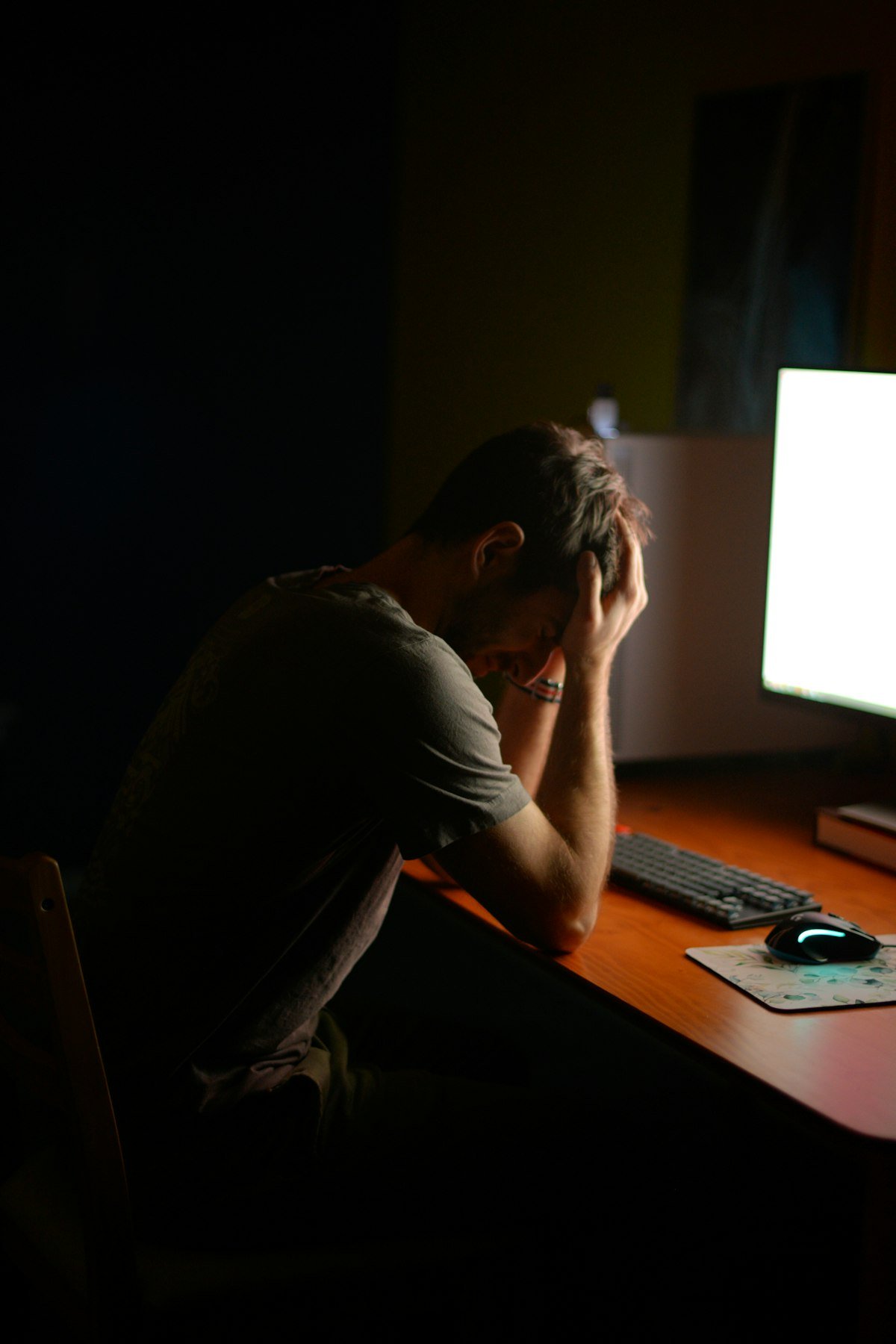
Digital Burnout: The Silent Mental Health Crisis Draining a Generation
Digital burnout has become one of the most pressing — and most underdiagnosed — mental health crises of our time. Learn to recognize the signs, understand the science, and discover real strategies for recovery from Dr. Pavan Sonar, Senior Psychiatrist in Mumbai.

There’s a particular kind of exhaustion that doesn’t go away after a good night’s sleep. You close your laptop, put your phone on charge, and lie down — but your mind keeps scrolling. Notifications you haven’t checked yet linger at the edges of your thoughts. A work email you forgot to reply to floats up unbidden. Your eyes feel strained, your shoulders tense, and somewhere deep in your chest, there’s a heaviness that you can’t quite name. What you may be experiencing is digital burnout.
If this sounds familiar, you’re not alone. What you’re experiencing has a name: digital burnout. And in 2026, it has become one of the most pressing — and most underdiagnosed — mental health crises of our time.
What Exactly Is Digital Burnout?
Burnout, as a clinical concept, was originally described in the context of workplace stress — the chronic exhaustion that comes from giving more than you can sustainably give. But the digital world has turbocharged this process in ways we’re only beginning to understand.
Digital burnout refers to the state of mental, emotional, and physical exhaustion caused by prolonged and excessive exposure to digital technology — smartphones, social media platforms, video calls, news feeds, messaging apps, and the ever-present pressure to stay connected, responsive, and “on.” It’s not just about spending too much time online. It’s about what that time costs us on the inside.
Unlike traditional burnout, which is often confined to the workplace, digital burnout bleeds into every corner of our lives. It follows us to dinner tables, into bedrooms, across weekends and vacations. There is no clear boundary between being “online” and “offline” anymore — and that blurring of lines is at the heart of the crisis.
Why Now? Why Is This Happening at Such Scale?
To understand why digital burnout has exploded as a mental health issue, we need to look honestly at the world we’ve built for ourselves — and the world that has been built around us.
The average person in urban India today spends anywhere between 7 to 10 hours per day on screens. Globally, that number is similar. We work on screens, we socialize on screens, we relax on screens, we shop, bank, date, exercise, meditate, and even sleep — guided by apps on our screens. The pandemic that began in 2020 dramatically accelerated this shift, pushing millions of people into remote work and online living seemingly overnight. And though years have passed, many of the habits formed during that period have become permanent fixtures of our lives.
Social media platforms are designed — by some of the most sophisticated engineers and psychologists in the world — to keep us engaged as long as possible. The infinite scroll, the unpredictable reward of new likes or comments, the fear of missing out (FOMO), the dopamine hit of a viral post — all of these mechanisms are not accidents. They are features. And they work. They work on our brains the way a slot machine works: intermittent, unpredictable rewards that keep us pulling the lever again and again.
Add to this the culture of “always-on” work — where WhatsApp messages from managers arrive at 11 PM, where being reachable at all times is quietly expected, where taking a true weekend off feels like a professional risk — and you have a recipe for a generation that is chronically overstimulated, chronically sleep-deprived, and chronically exhausted.
The Faces of Digital Burnout: Who Is Most at Risk?
Digital burnout does not discriminate by age, though it manifests differently across generations.
Young professionals in their 20s and 30s are perhaps the most visibly affected. They grew up digital natives, they work in digital environments, and their entire social lives are mediated through apps. Many report feeling a deep sense of paradox: they are more “connected” than any generation in history, yet they feel profoundly lonely, unseen, and emotionally hollow.
Teenagers and college students face a uniquely brutal version of this problem. Social media has become the primary arena in which adolescent identity is constructed and peer belonging is negotiated. The pressure to curate a perfect digital self, to gain followers, to respond instantly — these demands fall on developing brains that are not yet equipped to handle chronic social stress. The rates of anxiety, depression, and body image disorders among adolescents have risen sharply over the past decade, and the research increasingly points to social media as a significant contributing factor.
Parents, particularly mothers, face their own version — endlessly scrolling parenting forums, comparing milestones, absorbing the anxiety of a 24/7 news cycle filled with alarming stories about child safety, health scares, and societal dysfunction. The mental load was already heavy; the digital world has made it heavier.
Content creators and influencers — a profession that barely existed fifteen years ago — face a particularly acute form of digital burnout. Their livelihoods depend on constant output, constant engagement, constant performance of self. Many have spoken openly about the toll this takes: the inability to enjoy any experience without thinking about how to film it, the anxiety when engagement metrics dip, the identity confusion that comes from living so publicly.
And then there are senior professionals and executives, for whom being always reachable has become a badge of honor — and a trap. The more senior you are, the harder it becomes to justify being unavailable. And the more unavailable you fear being, the more tethered to your devices you become.
Recognizing the Signs: Is This You?
One of the insidious things about digital burnout is how normalized it has become. Because so many people are experiencing it, the symptoms often get dismissed as “just how life is now.” But recognizing the signs is the first step toward doing something about them.
You might be experiencing digital burnout if you feel a persistent sense of fatigue that doesn’t respond to rest. If you feel irritable, impatient, or emotionally flat — especially after time on social media or video calls. If you’ve lost interest in activities you used to enjoy, particularly offline ones. If you feel anxious when you’re not checking your phone, yet feel no real pleasure when you do check it. If your sleep is disrupted, either because you’re using devices late at night or because your mind is too wired to settle. If you feel a vague but constant sense of being behind, inadequate, or overwhelmed.
Physical symptoms are common too: eye strain, headaches, neck and shoulder pain, and a subtle but persistent sense of physical tension that doesn’t fully release even during rest. Cognitive symptoms include difficulty concentrating, a shortened attention span, trouble being present in real-world conversations, and what many people describe as “brain fog” — the sense that thinking clearly takes more effort than it used to.
In more serious cases, digital burnout can slide into clinical depression and anxiety, or exacerbate pre-existing mental health conditions. This is why it is so important not to dismiss these symptoms as weakness or laziness. They are signals from a taxed nervous system asking for relief.
The Neuroscience Behind Digital Burnout
To understand why digital overload is so mentally draining, it helps to understand a little of what’s happening in the brain.
Our brains evolved over hundreds of thousands of years in environments of relative informational scarcity. We were not designed to process hundreds of social interactions a day, absorb an endless stream of news and updates, or make hundreds of micro-decisions about what to engage with and what to ignore. Every notification, every scroll, every context switch asks something of our prefrontal cortex — the part of the brain responsible for attention, decision-making, and emotional regulation. And like any muscle, it gets tired.
What’s more, the constant novelty of the digital feed activates the brain’s dopaminergic reward system — the same system involved in addictive behaviors. Over time, this can raise our baseline threshold for stimulation, making ordinary offline experiences feel dull or unsatisfying by comparison. This is why so many people report feeling bored or restless when they’re away from their devices, even when they are doing things that should be enjoyable.
Sleep is another major casualty. Blue light from screens suppresses melatonin production, making it harder to fall asleep. But beyond the physical, the psychological activation caused by social media — the emotional arousal of comparing yourself to others, the anxiety of unread messages, the mental stimulation of videos and news — keeps the brain in a state of low-grade alertness that is incompatible with genuine rest. Many people lie in bed scrolling, believing they are “winding down,” when in fact they are doing the opposite.
The Social Media Comparison Trap
One of the most psychologically corrosive aspects of digital life is the social comparison it enables — and amplifies. Humans have always compared themselves to others; it’s a deeply rooted social instinct. But social media has distorted this process in a way that is genuinely unprecedented.
When you scroll through your feed, you are not seeing a representative sample of other people’s lives. You are seeing a carefully curated highlight reel — the best moments, the most flattering angles, the achievements, the vacations, the perfect family photos. And you are comparing these highlights to the full, unfiltered, messy reality of your own life. This is a fundamentally unfair comparison, and yet our brains don’t naturally make that adjustment. We compare their peaks to our valleys, their performance to our backstage, and we come away feeling inadequate.
Research consistently shows that heavy social media use is associated with lower self-esteem, increased rates of depression and anxiety, and a greater sense of loneliness — even as it appears, on the surface, to connect us to more people. There is something deeply sad about this paradox, and many of my patients describe it with painful clarity: “I know it’s not real,” they say, “but I still feel bad.”
The rise of AI-generated perfection — flawless digital avatars, algorithmically optimized content, beauty filters that have become indistinguishable from reality — has made this problem even worse. Young people are now growing up in a world where the baseline for physical appearance and life achievement has been set by images that are, quite literally, impossible to achieve. The psychological damage this is doing will take years to fully understand.
Doomscrolling and the Anxiety of Knowing Too Much
Another dimension of digital burnout that has become particularly prominent is what psychologists call “doomscrolling” — the compulsive consumption of negative news, even when doing so makes you feel worse. During periods of global instability — wars, climate disasters, economic crises, political upheaval — the temptation to stay constantly informed feels almost like a moral obligation. To look away feels irresponsible. To not know feels dangerous.
But the human nervous system was not built to hold the weight of every tragedy happening simultaneously across the globe. We evolved to respond to immediate, local threats — not to be existentially overwhelmed by a continuous broadcast of global suffering. Chronic exposure to distressing news activates the body’s stress response repeatedly throughout the day, keeping cortisol levels elevated and the nervous system in a state of low-grade alarm. Over time, this contributes significantly to anxiety, depression, and a pervasive sense of helplessness.
Being informed is important. Being relentlessly, helplessly inundated is something else entirely. Finding that boundary — and holding it — is one of the genuinely hard tasks of mental health in the digital age.
The Relationship Toll: When Screens Come Between Us
Digital burnout doesn’t just affect individuals. It affects relationships — and often in ways that are subtle enough that we don’t immediately recognize what’s happening.
Couples sitting across from each other at dinner, both on their phones. Parents physically present but mentally elsewhere, only half-listening to their children because a portion of their attention is always reserved for the device in their pocket. Friends who text frequently but rarely really talk. These patterns have become so common that we’ve stopped seeing them as problems.
There’s a term researchers use: “phubbing” — phone snubbing — which refers to the act of ignoring someone in front of you in favor of your phone. Studies show that phubbing, even in small doses, reduces relationship satisfaction, increases conflict, and makes the person being phubbed feel less valued and less connected. It communicates, without a word, that the screen is more interesting than they are. That message accumulates over time.
Children, in particular, are sensitive to parental phone use in ways that we are only beginning to document. Early research suggests that babies and toddlers whose primary caregivers are frequently distracted by devices show signs of insecure attachment and increased emotional dysregulation. The presence of a loving, attentive adult who is fully there — not just physically, but emotionally and attentionally — is foundational to healthy child development. Screens threaten that presence in ways we have not fully reckoned with.
What Recovery Looks Like: Real, Practical Steps for Digital Burnout
Digital burnout is not a character flaw or a sign of weakness. It is a predictable response to a genuinely difficult environment. And it is treatable — with real, evidence-based strategies that don’t require you to abandon technology entirely, but do require you to relate to it differently.
Create genuine digital boundaries. This means more than telling yourself you’ll “use your phone less.” It means establishing specific rules: no phones during meals, no devices in the bedroom after 10 PM, no work emails after a certain hour. These boundaries need to be concrete, specific, and consistent. Ambiguous intentions don’t survive contact with a buzzing notification.
Schedule intentional offline time. The recovery from digital burnout requires not just less screen time, but more time doing things that genuinely restore the nervous system — being in nature, having face-to-face conversations, engaging in physical activity, pursuing creative hobbies, or simply sitting quietly without the need to be productive or entertained. This is not wasted time. It is maintenance. It is what allows you to function at your best when you return to your responsibilities.
Audit your social media use honestly. Most people dramatically underestimate how much time they spend on social media. Use your phone’s built-in screen time tracking features to get an accurate picture, and then ask yourself honestly: is this how I want to be spending my time? Is it making me happier, more connected, more informed in ways that are useful? Or is it making me anxious, envious, and depleted? Unfollow accounts that consistently make you feel worse about yourself. Curate your feed intentionally rather than allowing an algorithm to do it for you.
Reclaim your mornings and evenings. The first and last hour of your day are particularly precious from a mental health perspective. Starting the day with social media or news floods the brain with other people’s agendas before you’ve had a chance to orient yourself. Ending the day with a screen primes the mind for wakefulness rather than sleep. Building gentle, screen-free rituals into these bookend hours — a walk, journaling, reading a physical book, meditation — can significantly improve both mood and sleep quality.
Address the underlying anxiety. For many people, compulsive phone checking is not really about staying informed or connected — it’s a way of managing anxiety. The phone offers a constant supply of stimulation that temporarily distracts from uncomfortable emotions: loneliness, boredom, inadequacy, fear. If this resonates, the work is not just about reducing screen time but about developing a healthier relationship with your own inner world — ideally with the support of a therapist who can help you build that capacity in a safe and structured way.
Talk to a professional when you need to. There is no shame in seeking help for digital burnout, especially when it has crossed into clinical territory — when it has become depression, anxiety, or relationship breakdown. A psychiatrist or psychologist can help you disentangle the threads: what’s situational, what’s structural, what’s biological, and what the best path forward looks like for you specifically. Treatment is not one-size-fits-all, and getting proper assessment can make an enormous difference.
A Note on Compassion: You Are Not Broken
I want to say something clearly, because I think it gets lost in a lot of discussions about screen time and mental health: you are not broken for struggling with this. You are not weak, undisciplined, or failing to cope.
You are a human being, with a human brain that evolved over millennia, trying to navigate a digital environment that was designed by a multi-trillion-dollar industry to be as engaging and hard to put down as possible. The fact that you sometimes lose that battle is not a personal failing. It is evidence of how powerful these forces are.
At the same time, you are not powerless. Awareness is the first and most important step. Once you can see the patterns clearly — once you can recognize the scroll as a coping mechanism, the late-night phone use as a form of avoidance, the constant checking as an anxiety response — you have the ability to choose differently. Not perfectly, not all at once, but gradually, with intention and support.
The goal is not a screen-free life. That is neither realistic nor necessarily desirable in the world we live in. The goal is a conscious life — one where technology serves your values and wellbeing, rather than the other way around. One where you are using the device, rather than being used by it.
When to Seek Help
If you’ve been experiencing persistent low mood, anxiety, or emotional numbness, difficulty functioning at work or in relationships, disrupted sleep that doesn’t improve with simple measures, or thoughts of hopelessness — please do not wait. These are signs that your mental health needs professional attention, and there is no virtue in suffering longer than necessary.
At my practice, I work with many patients who come in describing precisely the kind of exhaustion I’ve outlined in this post. Sometimes the presenting complaint is anxiety or depression; sometimes it’s relationship problems or burnout at work. But when we explore the full picture, the digital dimension is almost always part of the story. Understanding that, and addressing it thoughtfully, is part of what I believe good psychiatric care looks like in this era.
If you’re in Mumbai and would like to speak with me about what you’re experiencing, I invite you to reach out. You don’t have to have it all figured out before you come. You just have to be willing to start the conversation.
Final Thoughts: The World We Are Building
Digital burnout is a symptom of something larger: a society that has built an extraordinarily powerful technological infrastructure without fully reckoning with what it costs us as human beings. That reckoning is happening now — slowly, imperfectly, but genuinely. More and more people are questioning whether the always-on life is actually a good life. More and more young people are experimenting with digital minimalism, with phone-free weekends, with social media breaks that they describe as transformative.
There is a growing, quiet movement toward reclaiming something that technology threatened to take: the ability to be bored without reaching for a screen. To be alone without feeling lonely. To be present in an experience without immediately thinking about how to document it. To let a thought form slowly, without interruption. To listen to another person — really listen — without part of your mind tracking your notifications.
These capacities may seem small. But they are, I believe, foundational to mental health, to meaningful relationships, and to a life that feels genuinely lived rather than merely performed for an audience of thousands.
We built this world. We can also choose to build it differently — one small, intentional, screen-free moment at a time.
Dr. Pavan Sonar is a Senior Psychiatrist and Sexologist based in Mumbai, with extensive experience in treating anxiety, depression, burnout, and relationship issues. If you are struggling with any of the issues described in this article, please feel free to reach out for a consultation.