Book Appointment Now

What Schizophrenia Caregivers Should Know About Illness and Recovery

it involves acute episodes, periods of relative stability, and a long road of recovery that requires consistent medical supervision, structured rehabilitation, and unwavering psychiatric involvement at every single stage.
As a psychiatrist who has worked with hundreds of schizophrenia patients and their families, I — Dr. Pavan Sonar — want to share what every caregiver must understand to give their loved one the best possible chance at a stable, fulfilling life.
Understanding Schizophrenia: It Is a Long-Term Brain Illness, Not a Single Event
Schizophrenia is a chronic, severe mental disorder that affects how a person thinks, feels, and behaves. It is caused by a complex mix of genetic, neurological, and environmental factors — and it is not something that simply goes away after one hospital admission or one round of medication.
Caregivers must understand that schizophrenia involves distinct phases: the acute phase (crisis/psychosis), the stabilisation phase, and the recovery/maintenance phase. Each phase requires a different approach — but all of them demand the active presence of a qualified psychiatrist.
The Importance of Regular, Supervised Medication — Non-Negotiable for Every Caregiver to Understand
The single most important thing a caregiver can do for a person with schizophrenia is ensure that they take their prescribed medications regularly and under proper medical supervision. Antipsychotic medications are the cornerstone of schizophrenia treatment. Without them, the brain’s chemical imbalances that drive psychotic symptoms — hallucinations, delusions, and disorganised thinking — cannot be controlled.
Why do patients stop taking medication? There are several reasons — the patient feels better and believes they no longer need it, they experience side effects, they lack insight into their own illness (a symptom called anosognosia), or caregivers mistakenly believe the patient is cured after a period of calm. This is one of the most dangerous and common mistakes in schizophrenia care.
What caregivers must know about medication:
- Medication must never be stopped abruptly without consulting a psychiatrist. Stopping medication suddenly can trigger a severe relapse, sometimes worse than the original episode.
- Medications need to be supervised. A caregiver should ensure the patient actually swallows the medicine every day — not just be given the tablet.
- Long-acting injectable antipsychotics (LAIs) are often a better solution for patients who struggle with daily oral medication. These are given every 2 to 4 weeks under medical supervision and ensure consistent medication levels in the body.
- The “patient feels fine” is not a reason to stop medication. It usually means the medication is working. Stopping it risks undoing months or years of stability.
- Regular follow-ups with the psychiatrist are needed to monitor side effects, adjust doses, and ensure the treatment plan remains optimal for the patient’s current condition.
Post-Acute Phase Rehabilitation: The Bridge Between Crisis and Real Recovery
Once the acute phase of schizophrenia is brought under control — through hospitalisation, emergency medication, or intensive outpatient management — caregivers often breathe a sigh of relief and assume the hard part is over. It is not. In fact, the post-acute phase is where the real, life-changing work begins.
Psychiatric rehabilitation in the post-acute phase focuses on restoring the patient’s ability to function in day-to-day life. Schizophrenia does not just cause psychosis — it also significantly affects a person’s social skills, concentration, motivation, and ability to manage tasks independently. These are called negative and cognitive symptoms, and they persist even when the hallucinations and delusions are under control.
Effective post-acute rehabilitation includes:
- Psychoeducation for both patient and family: Understanding the illness, its triggers, warning signs of relapse, and realistic expectations of recovery.
- Social skills training: Helping patients relearn how to communicate, maintain relationships, and participate in social situations comfortably.
- Occupational therapy: Rebuilding daily living skills — personal hygiene, cooking, budgeting, and time management — that the illness may have disrupted.
- Cognitive remediation: Structured exercises to improve memory, attention, and problem-solving abilities.
- Vocational rehabilitation: Gradual reintegration into productive work or education, matched to the patient’s current capacity.
- Caregiver support and counselling: Teaching families how to communicate effectively, set healthy boundaries, and avoid high expressed emotion (criticism, hostility, or over-involvement), which is a known trigger for relapse.
/heading
The Crucial Role of a Psychiatrist at Every Stage of Schizophrenia
This cannot be emphasised strongly enough: a psychiatrist must be involved at every stage of schizophrenia — from diagnosis to acute management, through stabilisation, and throughout long-term maintenance and rehabilitation. There is no phase of schizophrenia care where psychiatric oversight becomes optional.
Here is what a psychiatrist does at each stage:
During the Acute Phase
The psychiatrist diagnoses the condition, rules out medical causes of psychosis, prescribes appropriate antipsychotic medications, decides whether hospitalisation is needed, and stabilises the patient safely. This requires years of specialised medical training and cannot be replaced by any counsellor, social worker, or general wellness practitioner.
During the Stabilisation Phase
The psychiatrist monitors the patient’s response to medication, adjusts dosages, manages side effects, conducts regular mental state examinations, and begins planning the rehabilitation phase. Regular outpatient appointments with the psychiatrist are essential during this period — ideally every 2 to 4 weeks initially, then monthly as the patient stabilises.
During the Maintenance and Recovery Phase
The psychiatrist oversees long-term medication management, coordinates the rehabilitation team, provides psychoeducation, identifies early warning signs of relapse, and adjusts the treatment plan as the patient’s life circumstances change. Recovery from schizophrenia is possible — but it is a slow, ongoing process that requires years of consistent psychiatric care.
A Strict Warning: Do NOT Send a Schizophrenia Patient to a Rehabilitation Centre That Does Not Have a Psychiatrist
This is perhaps the most critical point in this entire article, and I want every caregiver reading this to take it seriously.
In India, many families — often out of desperation, exhaustion, or genuine hope — send schizophrenia patients to residential rehabilitation facilities, ashrams, wellness centres, or de-addiction-style rehabs. These facilities may offer a structured routine, yoga, meditation, group activities, and vocational training — all of which can be genuinely helpful. But if these facilities do not have a qualified, on-site psychiatrist who actively manages the patient’s medication and mental health, sending your loved one there is not just unhelpful — it can be actively dangerous.
Why a rehabilitation centre without a psychiatrist is a serious risk for schizophrenia patients:
- Medication management requires a doctor. Schizophrenia medications are powerful psychotropic drugs that require expert monitoring. Only a licensed psychiatrist can prescribe, adjust, or change antipsychotic medication. If a patient at a non-psychiatric rehab centre develops a side effect, a relapse, or an adverse drug reaction, there is no qualified professional to respond appropriately.
- Relapse can happen silently and rapidly. A schizophrenia relapse can begin with subtle changes in sleep, mood, and behaviour weeks before a full psychotic episode erupts. A trained psychiatrist can identify these early warning signs and intervene immediately. Staff at a non-psychiatric rehab are not trained to do this.
- Alternative therapies cannot replace antipsychotics. Yoga, meditation, herbal remedies, and spiritual practices may support overall wellbeing, but they do not treat schizophrenia’s core neurological dysfunction. Centres that promote these as alternatives to psychiatric medication put patients at serious risk.
- Schizophrenia is not de-addiction. Many non-psychiatric rehab facilities are primarily designed for substance use disorders. The therapeutic model, daily structure, and counselling approaches used for de-addiction are fundamentally different from what schizophrenia recovery requires. These are different illnesses with different treatment pathways.
- Crisis management capacity is absent. If a patient in a non-psychiatric facility enters a psychotic crisis — becoming aggressive, self-harming, or completely losing contact with reality — the staff may be unprepared, undertrained, or even frightened. What follows is typically an emergency hospital admission that could have been prevented with proper psychiatric oversight.
What to Look for in a Legitimate Rehabilitation Centre for Schizophrenia
If residential care or rehabilitation is being considered for a schizophrenia patient, caregivers must ask the following questions before making any decision:
/list
Is there a full-time, qualified psychiatrist on the premises? (Not a visiting doctor once a week \u2014 a dedicated psychiatrist who is regularly available.)
Is medication supervised and dispensed by trained medical staff every day?
Is there a formal psychiatric rehabilitation programme (not just general counselling or de-addiction protocols)?
Is the facility registered with the appropriate medical or mental health authority?
Is family involvement and regular caregiver updates part of the programme?
Is there a clear emergency protocol for psychiatric crises?
What Caregivers Can Do at Home to Support Recovery
While professional care is irreplaceable, a caregiver’s role at home is immensely valuable. Here is how you can make a meaningful difference:
/list
Maintain a consistent daily routine. People with schizophrenia benefit enormously from predictable schedules for sleep, meals, activity, and rest.
Communicate calmly and clearly. Avoid arguments, harsh criticism, or emotionally charged conversations. Keep interactions warm, simple, and supportive.
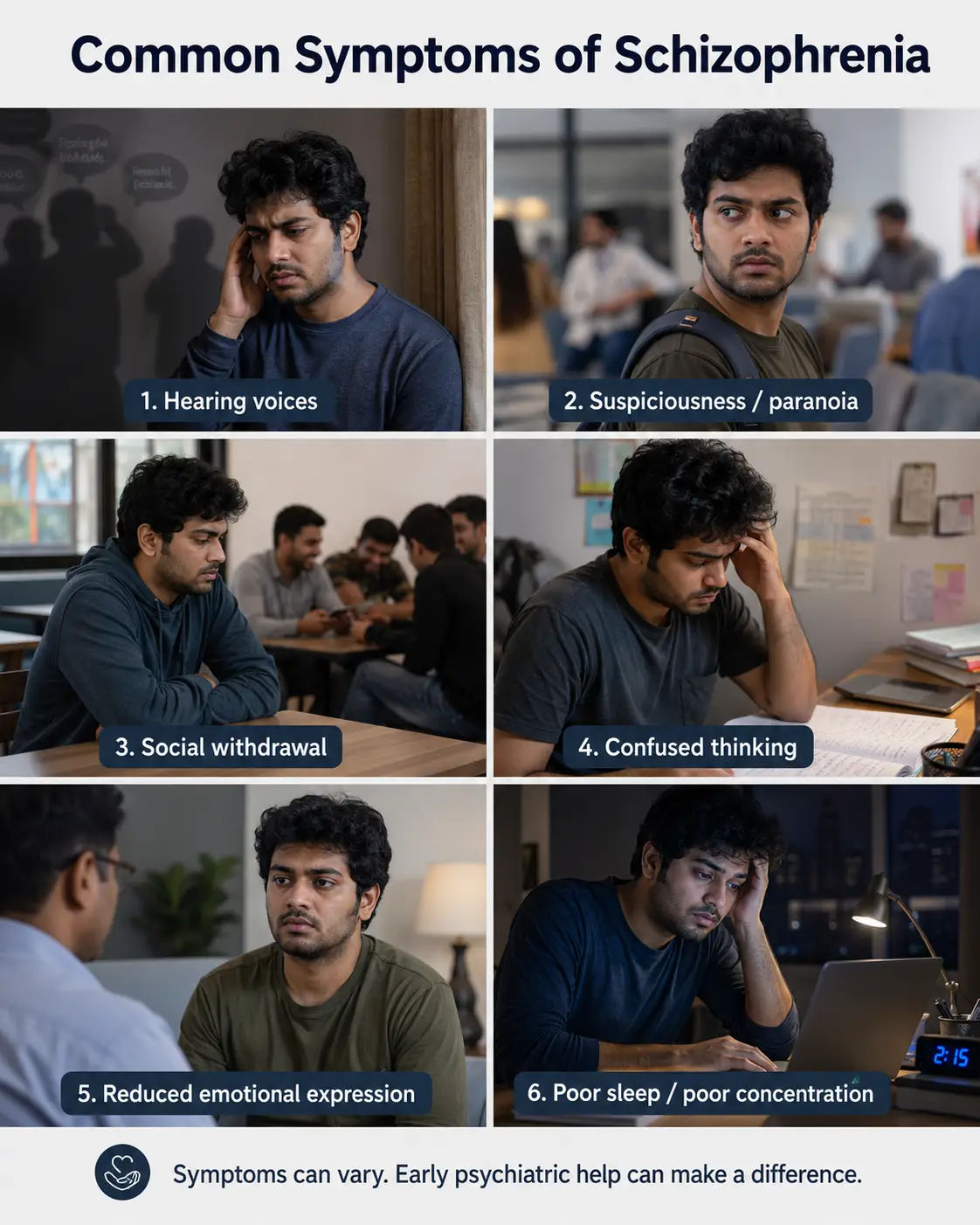
Monitor for early warning signs of relapse, such as sleep disturbances, social withdrawal, increased suspiciousness, or unusual statements. Report these immediately to your psychiatrist.
Ensure medication adherence every day without fail. Keep a medication diary and never skip doses.
Attend all psychiatrist appointments with the patient. Your observations about the patient’s day-to-day behaviour are crucial clinical information.
Take care of your own mental health. Caregiver burnout is real. Seek support, take breaks, and do not neglect your own wellbeing.
Recovery Is Possible — With the Right Support System in Place
Schizophrenia is a serious illness, but it is manageable. Millions of people around the world live with schizophrenia and lead meaningful, productive, and connected lives — because they have access to the right combination of medication, psychiatric care, rehabilitation support, and a knowledgeable, compassionate caregiver.
The key is to never go it alone, and never assume that goodwill, dedication, or alternative care alone is enough. Schizophrenia demands medical expertise. It demands a psychiatrist. And it demands that the patient’s family be informed, involved, and persistent in seeking proper care.
Consult Dr. Pavan Sonar — Expert Psychiatrist for Schizophrenia in Mumbai
If you are caring for a family member with schizophrenia in Mumbai and you need expert psychiatric guidance, I am here to help. With over 22 years of experience treating schizophrenia and other serious mental health conditions, I provide comprehensive care that includes accurate diagnosis, personalised medication management, post-acute rehabilitation planning, and ongoing caregiver support.